GlucoPril Official Website › Choosing A Supplement
Choosing A SupplementChoosing A Blood Sugar Supplement: Seven Checks
Seven questions you can answer from the packaging in about two minutes, each with a plain pass or fail and a reason it matters. They test disclosure rather than effectiveness, which is the only thing a label can honestly be tested for. At the end all seven are applied to the product this website sells.
A scorecard to carry to any label, and an honest score for this one.
Why a disclosure test rather than an effectiveness test
What a label can and cannot be asked, and why the answer is still worth having.
Nobody can tell from a label whether a formula works. Almost nothing in this category has been trialled as a finished product; what exists is trials of single ingredients, at doses chosen by researchers, in populations chosen by researchers.
What a label can be tested for is whether it gives you enough information to judge it. That is a real test, most products fail parts of it, and the failures are informative in a way a marketing page never is.
The seven checks below are ordered by how much they tell you. The first two are worth more than the other five put together, and a product that fails both is one you cannot evaluate at all, whatever else it does well.
The seven checks
Seven questions in the order of how much each one tells you.
1. Is an amount printed for every active ingredient?
Not a blend total. A weight per ingredient per serving. Without it no trial dose in the literature can be compared to what is in the bottle, and every claim on the front becomes unfalsifiable.
2. Does the ingredient list belong to the category the name is selling?
Look the ingredients up one at a time and note what their trials measured. A glucose product whose plants were studied for something else is not fraudulent, but it is selling one thing and containing another.
3. Is the plant part named?
Root, leaf, seed, fruit or aerial parts. Nettle root and nettle leaf are different ingredients; so are grape seed and grape skin. A panel that prints the part is telling you something most do not.
4. Does the form and the route match the trials?
A standardised oral extract taken daily for months is what most of this literature used. A drop, a gummy or an injection is a different delivery, and the further the form is from the trial, the less the trial says.
5. Can you tell how long a bottle lasts?
Servings per container, or a count and a daily dose. Without it, cost per day cannot be worked out, and cost per day is the only honest way to compare two products at different prices.
6. Is there a refund route with a person behind it?
A telephone number, a return address and a window with a length. A guarantee badge with no procedure behind it is a graphic.
7. Do the seals name the body behind them?
“GMP” and “FDA-registered facility” are real things that mean specific and limited things, and a seal that names no certifying body cannot be checked by anybody.
Answer all seven and you have a score out of seven that is comparable across products, which is more than any star rating in this category offers. A product scoring five is not better than one scoring three; it is more legible, and legibility is what lets you decide for yourself.
The seven checks applied to GlucoPril
All seven checks, answered against the packaging that ships with this product.
| Check | Result | What the packaging shows |
|---|---|---|
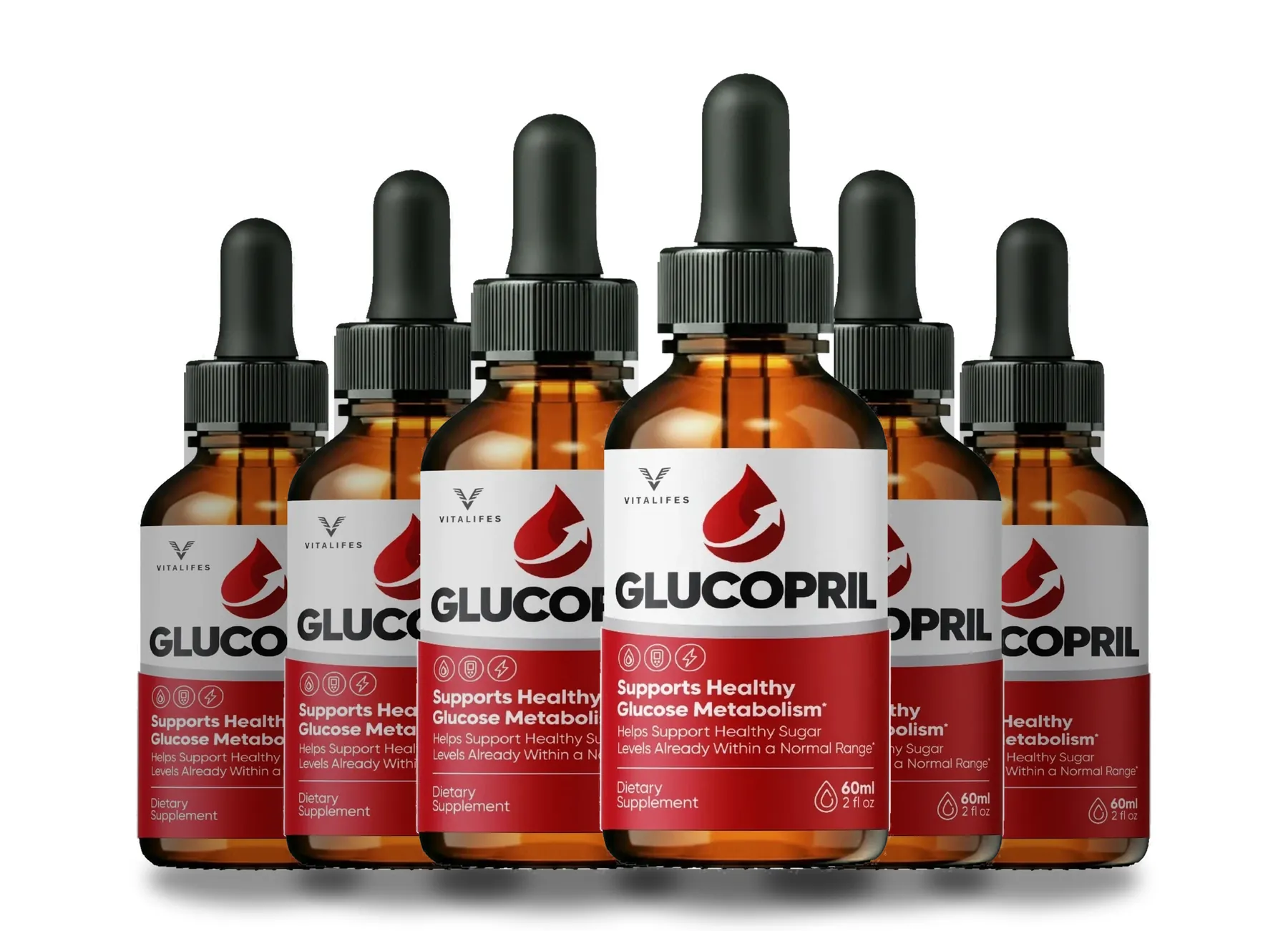
| 1. Amount printed per ingredient | Fail | No Supplement Facts panel appears on any image in the asset pack and no back label was supplied. Seven extracts are named with no weight against any of them. |
| 2. Ingredients match the category | Fail | The name and the front panel sell glucose. Six of the seven plants are the European venoactive set, whose trials measured legs. |
| 3. Plant part named | Pass | The seller’s own ingredient graphic gives the part for each: leaf, fruit, seed, root and aerial preparations are distinguished. |
| 4. Form matches the trials | Partial | The trials used standardised oral extracts at hundreds of milligrams a day. This is two drops of a liquid, which is a different delivery at an unstated amount. |
| 5. How long a bottle lasts | Fail | No servings-per-container figure is printed, so cost per day cannot be calculated from the packaging. |
| 6. Refund route with a person behind it | Pass | A telephone order desk, a named returns address and a documented five-step procedure. The window length sits on the seller’s listing. |
| 7. Seals name a certifying body | Fail | Four seals ship with the pack and three of them name nobody at all. |
Two passes, one partial, four failures. The score is printed here because a scorecard that exempted its own product would not be worth carrying anywhere.
Four failures out of seven is a poor score and it is the honest one. Any reader is entitled to ask why a website selling this bottle would print that, and the answer is that the alternative is a scorecard nobody can trust on any product, including this one.
The four failing rows, in detail
What each failing row actually costs a reader, in the order of how much it costs.
Check one is the heaviest of the four. Seven named extracts is genuinely more than a proprietary blend gives you, and it is genuinely less than a panel. Marketplace reports describe the actives grouped in a blend of about 121 mg — a figure from those reports rather than from the bottle, and a total for all seven plants together. One horse chestnut comparison used 600 mg of that single plant a day.
Check two is the one this whole website is organised around. The front panel sells glucose metabolism; the plants inside are the set a vascular clinic uses. The mechanism page works through both readings, and neither one is dishonest on its own. Together they are a mismatch worth knowing about before paying.
Check five is smaller and more annoying. Without a servings figure, two products at different prices cannot be compared on cost per day, which is the comparison that actually matters. Two drops out of 60 ml is a small fraction of a bottle, so the practical answer is that a bottle lasts a long time — but that is an inference rather than a figure.
Check seven is the one this desk finds most irritating, because it is the cheapest to fix. A GMP seal that names its certifying body is checkable in a browser in thirty seconds. One that names nobody asks for trust and supplies no route to verify it. The quality page audits all four seals one row at a time.
The two passing rows, and the partial
Three rows where the packaging does better than the category average, including one that carries the whole comparison.
Check three is a real pass and worth crediting. A great deal of this category prints “hawthorn extract” and stops. This artwork distinguishes leaf from fruit from seed from root across all seven plants, which is what makes the comparison in the failing rows possible at all. Without it nobody could tell which literature applied.
Check six is the other pass and it is the practical one. There is a telephone number with a person on the end of it, a named returns address and a five-step procedure written down. The steps are here. The window length is set on the seller’s listing rather than printed on this website, which is a limitation rather than a failure: it is read at the checkout before you confirm.
Check four is a partial and the reasoning is worth showing. The trials behind these plants used standardised oral extracts, mostly capsules or tablets, at hundreds of milligrams a day for weeks or months. A botanical liquid taken as two drops after a meal is an oral route, which is the same direction of travel, at an amount nobody has stated. Same route, different scale, unknown by how much.
Using the seven checks on any other label
The order to ask the seven in, and the two that most often change a decision.
Run them in order and stop early when you can. A product failing checks one and two cannot be evaluated, and the remaining five are decoration on a decision already made.
Check two is the one most people skip and the one that most often changes a purchase. It takes five minutes: write the ingredient names down, search each with the word “trial”, and note what the outcome measure was. An ingredient whose trials measured something unrelated to the bottle’s name is the single most common finding in this category.
Check five is the one that saves money. Cost per day, not cost per bottle, is the only comparison that survives different pack sizes and different serving schedules, and a label that will not let you calculate it has made that choice deliberately.
And check seven scales beautifully across a whole shelf. Photograph the seals, then look for a certifying body name on each. The seals that carry one can be checked; the seals that do not are art.
What this checklist cannot tell you
Five questions the seven checks were never built to answer.
- Whether the formula works. A label can pass all seven checks and still be a bottle with no trial behind the finished product, which describes almost everything on this shelf.
- Whether the amount in the bottle is the amount on the panel. That is a laboratory question, and a printed figure is a declaration made at manufacture.
- Whether an ingredient suits you personally. Existing conditions and an existing medication list are a conversation with whoever manages them.
- Whether the price is fair. Cost per day is a separate calculation, and a cheap bottle of the wrong plant part is not a bargain.
- Whether your readings need something else entirely. That is the one question worth answering before any of the other six.
Keeping the disclosure question and the efficacy question apart is the whole discipline of a scorecard like this one. MedlinePlus on blood glucose covers what the common tests measure, the ADA's glycaemic goals chapter covers what targets are set from them, and the companion guide covers what the evidence supports ingredient by ingredient.
Sources behind the seven checks
Nine references, retrieved rather than recalled.
- Koch R. Comparative study of Venostasin and Pycnogenol in chronic venous insufficiency. Phytother Res. 2002;16 Suppl 1:S1-5. PMID 11933130. https://pubmed.ncbi.nlm.nih.gov/11933130/
- Holubarsch CJ, Colucci WS, Meinertz T, et al. The efficacy and safety of Crataegus extract WS 1442 in patients with heart failure: the SPICE trial. Eur J Heart Fail. 2008;10(12):1255-63. PMID 19019730. https://pubmed.ncbi.nlm.nih.gov/19019730/
- Asbaghi O, Nazarian B, Reiner Z, et al. The effects of grape seed extract on glycemic control, serum lipoproteins, inflammation, and body weight: a systematic review and meta-analysis of randomized controlled trials. Phytother Res. 2020;34(2):239-253. PMID 31880030. https://pubmed.ncbi.nlm.nih.gov/31880030/
- Martinez-Zapata MJ, Vernooij RW, Simancas-Racines D, et al. Phlebotonics for venous insufficiency. Cochrane Database Syst Rev. 2020;11(11):CD003229. PMID 33141449. https://pubmed.ncbi.nlm.nih.gov/33141449/
- De Maeseneer MG, Kakkos SK, Aherne T, et al. Editor's Choice - European Society for Vascular Surgery (ESVS) 2022 clinical practice guidelines on the management of chronic venous disease of the lower limbs. Eur J Vasc Endovasc Surg. 2022;63(2):184-267. PMID 35027279. https://pubmed.ncbi.nlm.nih.gov/35027279/
- American Diabetes Association Professional Practice Committee. 6. Glycemic goals, hypoglycemia, and hyperglycemic crises: Standards of Care in Diabetes-2026. Diabetes Care. 2026;49(Suppl 1):S132-S149. PMID 41358894. https://pubmed.ncbi.nlm.nih.gov/41358894/
- Diabetes and Dietary Supplements: What You Need To Know. National Center for Complementary and Integrative Health, National Institutes of Health. https://www.nccih.nih.gov/health/diabetes-and-dietary-supplements
- Using Dietary Supplements Wisely. National Center for Complementary and Integrative Health, National Institutes of Health. https://www.nccih.nih.gov/health/using-dietary-supplements-wisely
- Blood Glucose. MedlinePlus, U.S. National Library of Medicine. https://medlineplus.gov/bloodglucose.html
Order GlucoPril with two passes and four failures in front of you
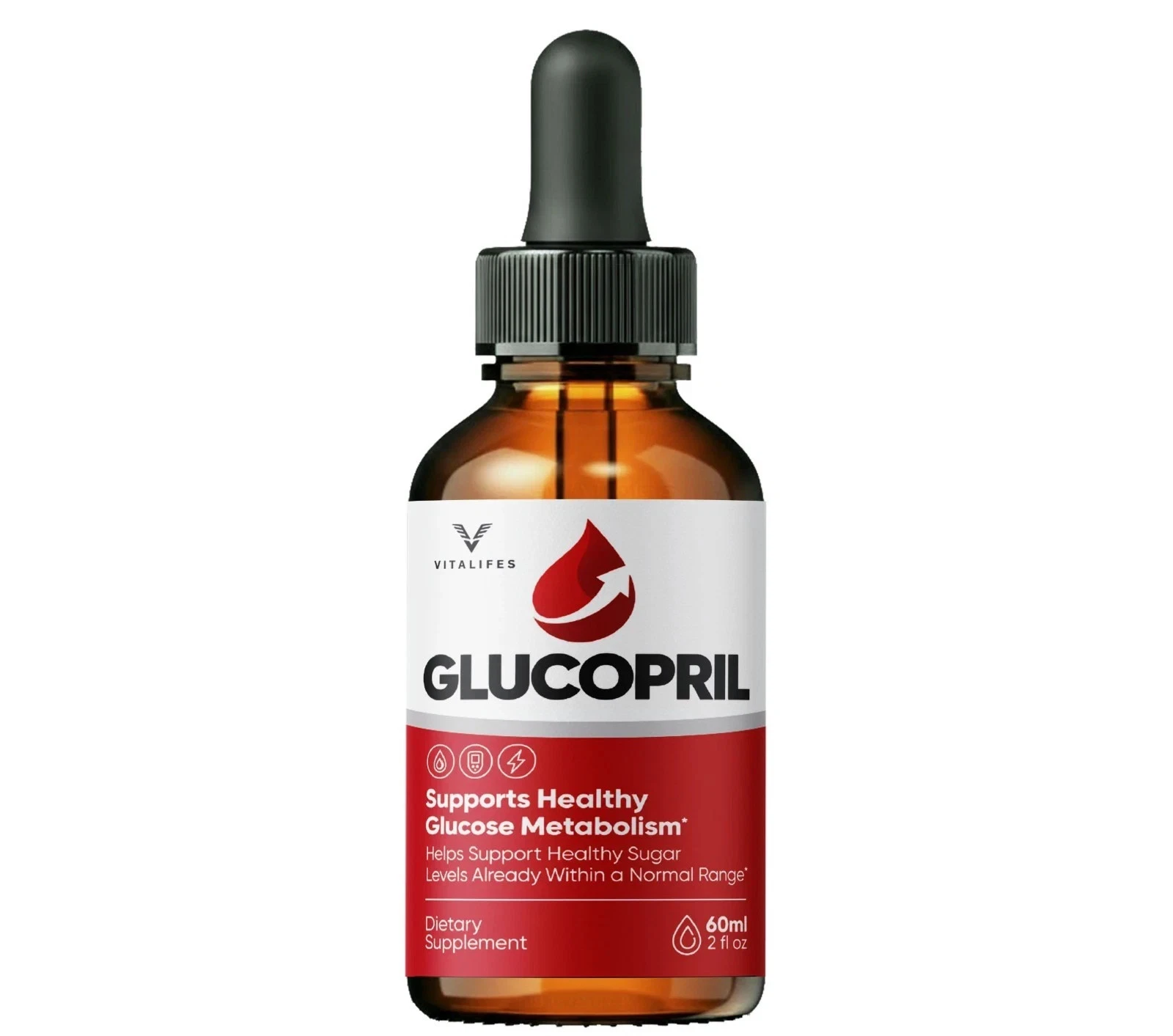
The score is printed above rather than tucked away. Seven named extracts, two drops a day after a meal, and the guarantee window read off the listing at the checkout.
Price at checkout · one payment, no subscription · money-back guarantee as printed at the checkout
Order GlucoPril On The Official Website2 drops a day after a meal · 60 ml a bottle · lot GLU-26/GL-2779