GlucoPril Official Website › Ingredients
IngredientsGlucoPril Ingredients
Seven botanical extracts are named on the GlucoPril artwork, and this page is about what each one is.
Gotu kola leaf, Chinese hawthorn fruit, horse chestnut seed, stone root, motherwort, butcher’s broom root and grape seed, in that order. Species, plant part and the compound a laboratory measures for each are set out below.
Identity rather than amount: what the seven things in this bottle actually are.
What the GlucoPril ingredient artwork prints
Seven names in a fixed order, transcribed exactly as the seller prints them.
The seller ships one graphic that names the contents. It is headed SEVEN NAMED BOTANICAL EXTRACTS, and the seven run down it in a fixed order that this website keeps everywhere it reproduces them. Reading that order is worth thirty seconds: the plants a formulator puts first are usually the ones the formula is built around.
| # | As the artwork prints it | Species | Part named |
|---|---|---|---|
| 1 | Gotu Kola Extract | Centella asiatica | Leaf |
| 2 | Chinese Hawthorn Extract | Crataegus | Fruit |
| 3 | Horse Chestnut Extract | Aesculus hippocastanum | Seed |
| 4 | Stone Root Extract | Collinsonia canadensis | Root |
| 5 | Motherwort Extract | Leonurus | Aerial parts |
| 6 | Butcher’s Broom Extract | Ruscus aculeatus | Root and rhizome |
| 7 | Grape Seed Extract | Vitis vinifera | Seed |
Transcribed from the seller's own ingredient graphic. The bracketed plant parts are the artwork's, not this desk's.
Four of the seven carry a plant part in brackets on the artwork, which is more than a good deal of this category bothers with. A botanical name without a part is an incomplete instruction: the same species can yield two extracts with different chemistry, different research and different reputations, and the consumer guidance on supplement labels makes the point that a name alone is rarely enough to identify what you bought.
The full comparison of each plant against the research that stands behind it lives on the how it works page, where the mechanism is the subject. This page is about identity: what these seven things are, how they are made, and what a laboratory would measure to confirm one of them.
Which plant part each GlucoPril extract uses
Four rows line up with their research, one does not, and one has nothing to line up against.
Plant part is the single most useful thing a botanical label can tell you, and it is where two of these seven rows diverge from the studies people cite for them.
| Extract | Part on the artwork | Part used in the published work | Do they match? |
|---|---|---|---|
| Gotu kola | Leaf | Leaf, as a triterpene fraction | Yes |
| Chinese hawthorn | Fruit | Leaf with flower, in the standardised European extract | No. Same genus, different tissue |
| Horse chestnut | Seed | Seed | Yes |
| Stone root | Root | Nothing has been trialled in people | No comparison exists |
| Motherwort | Aerial parts | Aerial parts of a different species, as an injection | Partly |
| Butcher’s broom | Root | Root and rhizome | Yes |
| Grape seed | Seed | Seed | Yes |
Read from the artwork on the left and from the methods sections of the trials cited on this website on the right.
The hawthorn row is the interesting one. Hawthorn fruit is the traditional Chinese material, used in food as well as medicine. The European clinical literature ran on a leaf-and-flower preparation standardised to its procyanidin content: that is the material in the two-year SPICE trial and in the studies the Cochrane review pooled. Fruit and leaf are both hawthorn, and they are not interchangeable evidence.
Motherwort is the second. The artwork names the genus without a species. The controlled work all used Leonurus japonicus prepared as an injectable solution, which is three steps away from a botanical drop: different species, different extraction, different route into the body.
The other five line up. Gotu kola leaf, horse chestnut seed, butcher’s broom root and grape seed are each the tissue their own research used, and NCCIH is explicit that with horse chestnut the part and the processing are not a detail: raw seed is not safe to eat, and the standardised extract is the studied material. The side effects page carries that distinction in full.
How each GlucoPril extract is prepared, and what would confirm it
Seven identity cards: what each plant is, and what a test would look for.
What follows is identity rather than dose: the species, the part, the compound a laboratory measures to call an extract what it says it is, and the preparation the clinical work actually used.
Gotu Kola Extract
Centella asiatica, leafMarker: triterpenesA creeping marsh plant from South and Southeast Asia, used in both Ayurvedic and Chinese practice long before anybody measured an ankle with it. The material in the clinical literature is not the leaf itself but a concentrated fraction of four triterpenes, sold in Europe as a defined pharmaceutical preparation. A phase 1 pharmacokinetic study of a standardised Centella product is the one place this website can point to for what actually reaches the bloodstream, and it looked at a capsule rather than a drop. Without a stated extract ratio on the artwork, the word “extract” here covers everything from a mild infusion to that fraction.
Chinese Hawthorn Extract
Crataegus, fruitMarker: procyanidinsHawthorn is a thorny shrub of the rose family, and the fruit is a small red haw eaten as a snack and a digestive across northern China. The European medicine cabinet uses a different part and a different species group, standardised to its procyanidin content and sold under a preparation code. That distinction runs through every hawthorn reference on this website, including the benefit-risk appraisal of the European extract. A fruit extract has its own chemistry and its own culinary history; what it does not have is the trial record people reach for when they see the word hawthorn.
Horse Chestnut Extract
Aesculus hippocastanum, seedMarker: aescinThe conker. Its seed carries a saponin called aescin, and aescin is what a standardised horse chestnut extract is sold by: a European preparation is normally declared as a percentage of it, which is how a pharmacist can compare two products at all. Aescin is also why the raw seed is toxic and the processed extract is not. A two-study report on where this preparation stops working is worth reading by anyone who assumes a plant extract is either effective or inert; the answer for this one is neither, and it depends on what is being asked.
Stone Root Extract
Collinsonia canadensis, rootMarker: none in general useA North American woodland mint, also called richweed or horse balm, whose root was a nineteenth-century Eclectic physician’s remedy for hoarseness and for haemorrhoids. It arrives in modern circulatory blends on that inheritance. No marker compound is in routine commercial use for it, which means no laboratory can be asked to confirm that a given liquid contains the amount of it somebody intended. The one indexed study naming the plant is a laboratory screen of many natural products at once, and it was not asking a question about veins or about blood sugar.
Motherwort Extract
Leonurus, aerial partsMarker: leonurineA tall square-stemmed mint with a long European reputation in nervous palpitations, which is where the name comes from. Two species share the common name and they are not used the same way: Leonurus cardiaca is the European herb, and Leonurus japonicus is the one in the hospital literature. A phytochemical analysis of the European species maps its phenolics and iridoids, while the review of leonurine follows the alkaloid that most of the pharmacology is built on. Neither line of work is about glucose, and both matter to who should not take this bottle.
Butcher’s Broom Extract
Ruscus aculeatus, root and rhizomeMarker: ruscogeninsA tough evergreen shrub of Mediterranean scrub whose stiff shoots really were bundled into brooms. The medicinal material is the underground part, and its steroidal saponins are the compounds a standardised preparation is sold by. Almost every trial used it inside a fixed combination with a citrus flavonoid and vitamin C rather than alone, which is why the pooled analysis reports on that combination and why the later review is framed around which patients the combination suits. Two of those three components are not on this artwork.
Grape Seed Extract
Vitis vinifera, seedMarker: proanthocyanidinsThe seeds left after pressing wine grapes, and the most industrially standardised material of the seven: proanthocyanidin content is declared on almost every commercial grape seed extract, which makes products comparable in a way the rest of this list is not. It is also the one plant here whose research has looked at glycaemic measures directly as well as at vessel function. Where it sits on what this pack is worth paying for depends entirely on how much of it a two-drop serving carries, which is the number nobody publishes.
An extract has a ratio and often a standardisation figure: 10:1, or 20 per cent aescin, or 95 per cent proanthocyanidins. Those two numbers are what let a buyer compare one bottle with another, and neither appears on this artwork for any of the seven. That is a separate question from how many milligrams are in a drop, and it is why the testing and quality page treats standardisation as its own audit rather than folding it into the amount.
What is not in the GlucoPril bottle
Three things people reasonably expect in a blood sugar formula, and where they are.
A short and specific list rather than a general one. Three things a buyer might reasonably expect to find in a blood sugar formula, and where each one actually is.
The herbs people associate with blood sugar
Berberine, cinnamon, gymnema, bitter melon and chromium are the names that dominate this category, and none of them is among the seven. The network meta-analysis that ranks six of them is the reason they dominate it. If one of those is what you came for, buy it as its own product and read its panel.
Vitamins and minerals
The ingredient artwork is seven botanical extracts and stops there. One of the seller’s marketing panels advertises “vital vitamins and minerals”, which the ingredient artwork itself contradicts. Both panels are reproduced and refused in the critique on the home page.
A named carrier
Every liquid supplement is mostly its base: water, glycerin, alcohol or a mixture. The artwork names none, so a buyer who avoids alcohol for religious, medical or personal reasons has one question to put to the order desk before ordering rather than after. The contact page has the number and what to have ready.
None of those three is a reason on its own to avoid this bottle. They are the three questions most likely to be answered wrongly by somebody skim-reading a sales page, and answering them here costs nothing. The standing guidance on buying supplements puts the same checks in a different order.
GlucoPril ingredient questions
How many ingredients does GlucoPril have?
Seven named botanical extracts, listed on the seller’s own ingredient graphic in the order reproduced at the top of this page. No eighth name appears in the distributor’s paperwork that is missing from the artwork, or the other way round.
Is there a Supplement Facts panel?
No panel ships with this product. All fifteen images in the asset pack were opened and none carries one, and no back label was supplied. The amounts are the manufacturer’s to publish. What this website does instead is print the dose each published trial used, on the dosage section.
What does “extract” mean on this label?
Less than most people assume. Without an extract ratio or a standardisation percentage beside it, the word covers a wide range of concentrations. The marker compounds listed in the cards above are what a laboratory would measure to confirm identity and strength.
Is the hawthorn in it the same hawthorn as in the heart trials?
Same genus, different material. The artwork says Chinese hawthorn fruit. The European clinical extract is made from leaf with flower and standardised to its procyanidins. That is a real difference and this website treats it as one.
Does GlucoPril contain berberine or chromium?
No. Several look-alike websites advertise a berberine, gymnema, bitter melon, cinnamon, chromium and alpha lipoic acid formula under this brand name. Those are the herbs the glycaemic network meta-analysis ranks, and none of them is among the seven here. That is a different product with a different ingredient list. The where to buy page sets out how to tell them apart before you pay.
Is it vegan, and does it contain alcohol?
The artwork names no carrier liquid and no capsule shell, since there is no capsule. Seven botanical extracts are all that is named. Anyone avoiding alcohol or animal-derived ingredients should ask the order desk what the base is before ordering.
Are the ingredients third-party tested?
No testing body is named on the pack, and no certificate is published with it. Lot GLU-26/GL-2779 and certificate reference GLU-2779-26-GL are filing references. The batch page covers what they can and cannot confirm.
Sources for the GlucoPril ingredient list
Every study and monograph named above, grouped by the plant it belongs to.
- Wright KM, Bollen M, David J, et al. Pharmacokinetics and pharmacodynamics of key components of a standardized Centella asiatica product in cognitively impaired older adults: a phase 1, double-blind, randomized clinical trial. Antioxidants (Basel). 2022;11(2). PMID 35204098. https://pubmed.ncbi.nlm.nih.gov/35204098/
- Holubarsch CJ, Colucci WS, Meinertz T, et al. The efficacy and safety of Crataegus extract WS 1442 in patients with heart failure: the SPICE trial. Eur J Heart Fail. 2008;10(12):1255-63. PMID 19019730. https://pubmed.ncbi.nlm.nih.gov/19019730/
- Pittler MH, Guo R, Ernst E. Hawthorn extract for treating chronic heart failure. Cochrane Database Syst Rev. 2008;2008(1):CD005312. PMID 18254076. https://pubmed.ncbi.nlm.nih.gov/18254076/
- Holubarsch CJF, Colucci WS, Eha J. Benefit-risk assessment of Crataegus extract WS 1442: an evidence-based review. Am J Cardiovasc Drugs. 2018;18(1):25-36. PMID 29080984. https://pubmed.ncbi.nlm.nih.gov/29080984/
- Ottillinger B, Greeske K. Rational therapy of chronic venous insufficiency - chances and limits of the therapeutic use of horse-chestnut seeds extract. BMC Cardiovasc Disord. 2001;1:5. PMID 11747472. https://pubmed.ncbi.nlm.nih.gov/11747472/
- Horse Chestnut. National Center for Complementary and Integrative Health, National Institutes of Health. https://www.nccih.nih.gov/health/horse-chestnut
- Mazzio E, Badisa R, Mack N, et al. High throughput screening of natural products for anti-mitotic effects in MDA-MB-231 human breast carcinoma cells. Phytother Res. 2014;28(6):856-67. PMID 24105850. https://pubmed.ncbi.nlm.nih.gov/24105850/
- Xia WT, Zhou H, Wang Y, et al. Motherwort injection in preventing post-abortion hemorrhage after induced abortion: a multi-center, prospective, randomized controlled trial. Explore (NY). 2020;16(2):110-115. PMID 31492552. https://pubmed.ncbi.nlm.nih.gov/31492552/
- Kuchta K, Matsuura N, Nguyen TH, et al. Phenolic and iridoid glycosides from Leonurus cardiaca L. and their effects on the alpha, delta, and gamma subtypes of the PPAR system. Molecules. 2025;30(2). PMID 39860288. https://pubmed.ncbi.nlm.nih.gov/39860288/
- Huang L, Xu DQ, Chen YY, et al. Leonurine, a potential drug for the treatment of cardiovascular system and central nervous system diseases. Brain Behav. 2021;11(2):e01995. PMID 33300684. https://pubmed.ncbi.nlm.nih.gov/33300684/
- Kakkos SK, Allaert FA. Efficacy of Ruscus extract, HMC and vitamin C, constituents of Cyclo 3 fort, on improving individual venous symptoms and edema: a systematic review and meta-analysis of randomized double-blind placebo-controlled trials. Int Angiol. 2017;36(2):93-106. PMID 28225220. https://pubmed.ncbi.nlm.nih.gov/28225220/
- Kakkos SK, Guex JJ, Lugli M, et al. CEAP clinical classes C0S-C4: differences, similarities and role of Ruscus + HMC + vitamin C in patients with chronic venous disease. Int Angiol. 2020;39(2):118-124. PMID 32052951. https://pubmed.ncbi.nlm.nih.gov/32052951/
- Asbaghi O, Nazarian B, Reiner Z, et al. The effects of grape seed extract on glycemic control, serum lipoproteins, inflammation, and body weight: a systematic review and meta-analysis of randomized controlled trials. Phytother Res. 2020;34(2):239-253. PMID 31880030. https://pubmed.ncbi.nlm.nih.gov/31880030/
- Foshati S, Nouripour F, Sadeghi E, Amani R. The effect of grape (Vitis vinifera) seed extract supplementation on flow-mediated dilation, blood pressure, and heart rate: a systematic review and meta-analysis of controlled trials with duration- and dose-response analysis. Pharmacol Res. 2022;175:105905. PMID 34798267. https://pubmed.ncbi.nlm.nih.gov/34798267/
- Kumar S, Sharma SK, Mudgal SK, et al. Comparative effectiveness of six herbs in the management of glycemic status of type 2 diabetes mellitus patients: a systematic review and network meta-analysis of randomized controlled trials. Diabetes Metab Syndr. 2023;17(8):102826. PMID 37451111. https://pubmed.ncbi.nlm.nih.gov/37451111/
- Using Dietary Supplements Wisely. National Center for Complementary and Integrative Health, National Institutes of Health. https://www.nccih.nih.gov/health/using-dietary-supplements-wisely
- Dietary Supplements. MedlinePlus, U.S. National Library of Medicine. https://medlineplus.gov/dietarysupplements.html
Order GlucoPril with the ingredient list in front of you
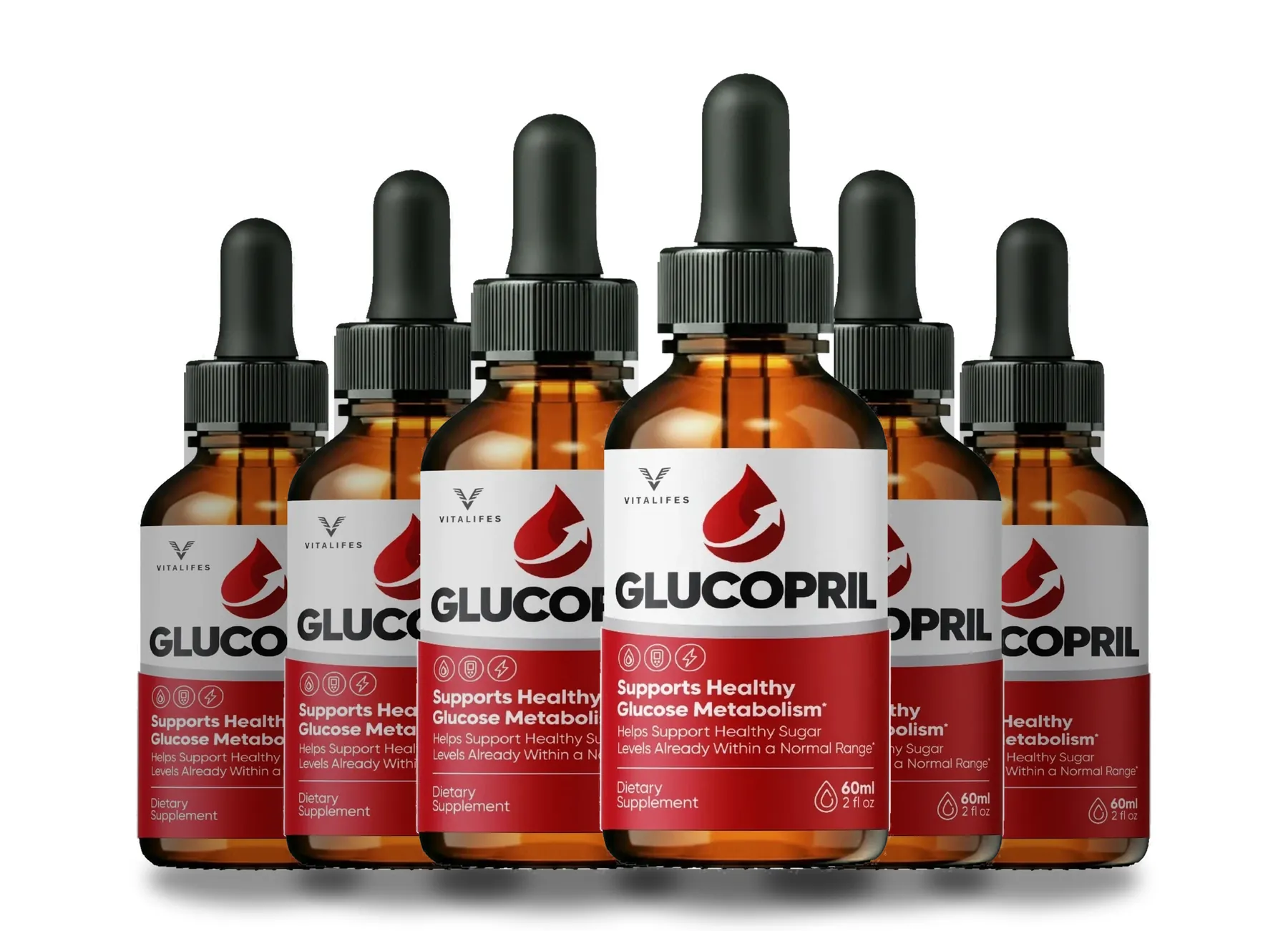
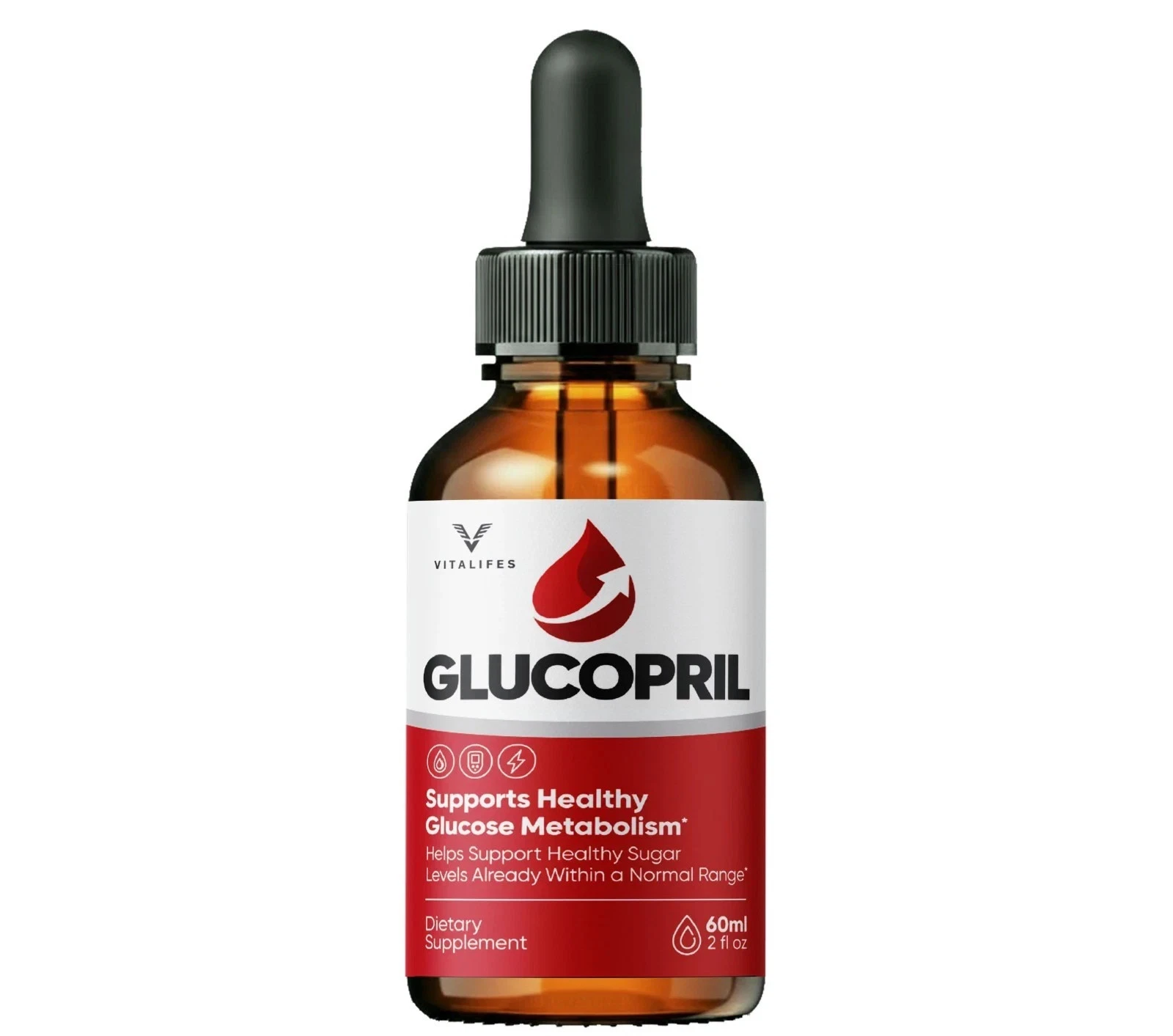
Seven named botanical extracts in a 60 ml amber dropper bottle, two drops a day after a meal. Check the seven names against the bottle that arrives.
Price at checkout · one payment, no subscription · money-back guarantee as printed at the checkout
Order GlucoPril On The Official Website2 drops a day after a meal · 60 ml a bottle · lot GLU-26/GL-2779