GlucoPril Official Website › How It Works
How It WorksHow Does GlucoPril Work?
GlucoPril carries two proposed mechanisms, and only one of them has much research behind it.
Its plants come from the European venoactive tradition, where the endpoints are leg volume and capillary filtration. The glucose side rests on grape seed, whose pooled result is 2.01 mg/dL of fasting plasma glucose with HbA1c unchanged.
Two chains, the measurements that would confirm each, and the arithmetic of a two-drop serving.
The two questions GlucoPril is asking at once
What a mechanism has to do to count, and which of the two here can be checked.
A mechanism is a chain: something enters the body, reaches a tissue, changes a process, and the change shows up in a measurement. This bottle has two chains proposed for it, and they end in two completely different measurements.
The first chain is the one on the front panel. Glucose metabolism is measured by fasting plasma glucose, by post-meal readings, and over months by HbA1c, and the standards that define those targets are revised every year. It is an exceptionally well-instrumented question. Anything that claims to touch it can be checked.
The second chain is the one the ingredient list belongs to. Venous function is measured by leg volume, ankle circumference, capillary filtration rate and symptom scores for heaviness and tingling. Those are the endpoints in the Cochrane review of phlebotonics, and they are the endpoints in almost every trial cited on the ingredients page.
Keeping the two apart is the whole of an honest mechanism section. Most of what follows is about the second chain, because that is where the evidence is.
What the GlucoPril plants are proposed to do to a blood vessel
Four proposed steps, three of them measured, and where a guideline actually puts them.
Chronic venous disease is a plumbing problem. Valves in the leg veins stop closing cleanly, pressure rises in the vessels below them, and the smallest vessels start leaking fluid into the surrounding tissue faster than the lymphatics carry it away. That is what an ankle that has swollen by the evening is.
Venous tone
Several of these plants are described as increasing the contraction of the smooth muscle in a vein wall. A vein with more tone empties better against gravity. A 2026 appraisal of the venoactive class is where that proposition is weighed against what the guidelines actually recommend, and it is a good deal more sober than a sales page.
Capillary filtration
This is the measurable one. A transcapillary filtration study put numbers on how much less fluid crossed the capillary wall after horse chestnut seed extract, and a laser-Doppler and leg-volumetry study did something similar for the Centella fraction. Both were measuring a vessel, not a blood sugar.
Inflammation at the vessel wall
The polyphenol argument: proanthocyanidins and flavonoids are proposed to reduce the low-grade inflammatory signalling that keeps a leaking capillary leaking. An early meta-analysis of cardiovascular risk markers is the version of that claim with actual numbers attached, and the numbers are modest.
Where the guidelines put all of it
Not first. The ESVS 2022 guidelines and the 2023 US varicose vein guidelines treat compression and the correction of the underlying reflux as the mainstay, with venoactive preparations as an adjunct for symptoms. That is a real place in a real guideline, and it is a smaller place than the category’s marketing suggests.
None of the four steps above is a glucose mechanism, and this website does not present them as one. They are set out because they are what the plants in this bottle have actually been studied for, and because a reader who understands them can judge the rest of the page. The benefits page handles what the label is entitled to say.
What could connect GlucoPril to a glucose reading
One plant, one pooled number, and the size of it stated rather than implied.
One plant on this list has been studied against glycaemic measures directly, and the result is small enough to state exactly rather than round.
| What was measured | What the pooled result showed | What that means at the kitchen table |
|---|---|---|
| Fasting plasma glucose | 2.01 mg/dL lower than control across fifty randomised trials of grape seed extract | About a fortieth of the gap between a normal and a diabetic fasting reading. Below the day-to-day scatter of most home meters. |
| HbA1c | Unchanged | The three-month average did not move, which is the measure a clinician watches. |
| Blood pressure | A modest reduction in sixteen pooled grape seed trials, and in the one hawthorn trial run in people with type 2 diabetes | A different outcome from the one on the front of the bottle, and the better-supported of the two. |
| Flow-mediated dilation | Improved in the duration and dose-response analysis of grape seed | A vessel measurement again. The pattern in this bottle is consistent, and it is vascular. |
Sources for every row are listed at the foot of this page.
The proposed pathway, where one is proposed at all, runs through polyphenols: proanthocyanidins are argued to slow carbohydrate digestion at the gut wall and to reduce oxidative stress in tissues that handle glucose. The fifty-trial pool is the best test of whether that adds up to anything, and its answer is two milligrams per decilitre.
The honest summary is that the glucose chain here is real, published and very small, while the vascular chain is real, published and moderate. NCCIH’s review of supplements and diabetes reaches the same conclusion about the category as a whole. The timeline page sets out how to test either one on yourself without fooling yourself.
Why a seven-plant blend like GlucoPril is harder to reason about
Five things a blend changes, including the one that argues in its favour.
Every trial cited on this website tested one plant. This bottle contains seven, and that difference is not a detail of presentation: it changes what can be concluded at all.
- A blend cannot inherit its ingredients’ results. Seven plants each studied alone tell you about seven plants studied alone. The finished mixture is a different product and has not been trialled.
- The share of each plant is unknown. With no amount beside any name, a reported total of about 121 mg could be one dominant extract with six token additions, or seven equal seventeenths. Those are very different bottles behind the same artwork.
- Order on a label is a convention, not a guarantee. On a Supplement Facts panel ingredients are listed by descending weight. On a marketing graphic with no panel behind it, the order is whatever the designer chose.
- Combinations can genuinely add up. This is the fair side of the argument: the butcher’s broom evidence is itself evidence about a fixed combination rather than the plant alone, which is why the earlier meta-analysis reports on that combination and not on Ruscus by itself.
- And combinations can also dilute. Seven plants sharing one small delivered volume is the arithmetic problem, and it is the reason this desk treats the blend question as the central one rather than as a footnote.
None of that makes a blend a bad idea. It makes a blend a claim that needs its own evidence, and the evidence for this one is the seven single-plant literatures set out on the ingredients page rather than anything about the mixture. The Cochrane review of the wider class is honest about the same limitation across dozens of preparations: heterogeneity is the recurring word in it.
What a two-drop GlucoPril serving can physically deliver
The arithmetic of a tenth of a millilitre, and the fair counter-argument to it.
Mechanism is only half the question. The other half is how much of a compound arrives, and that is where a liquid concentrate has to be taken seriously as a format rather than assumed to be equivalent to a capsule.
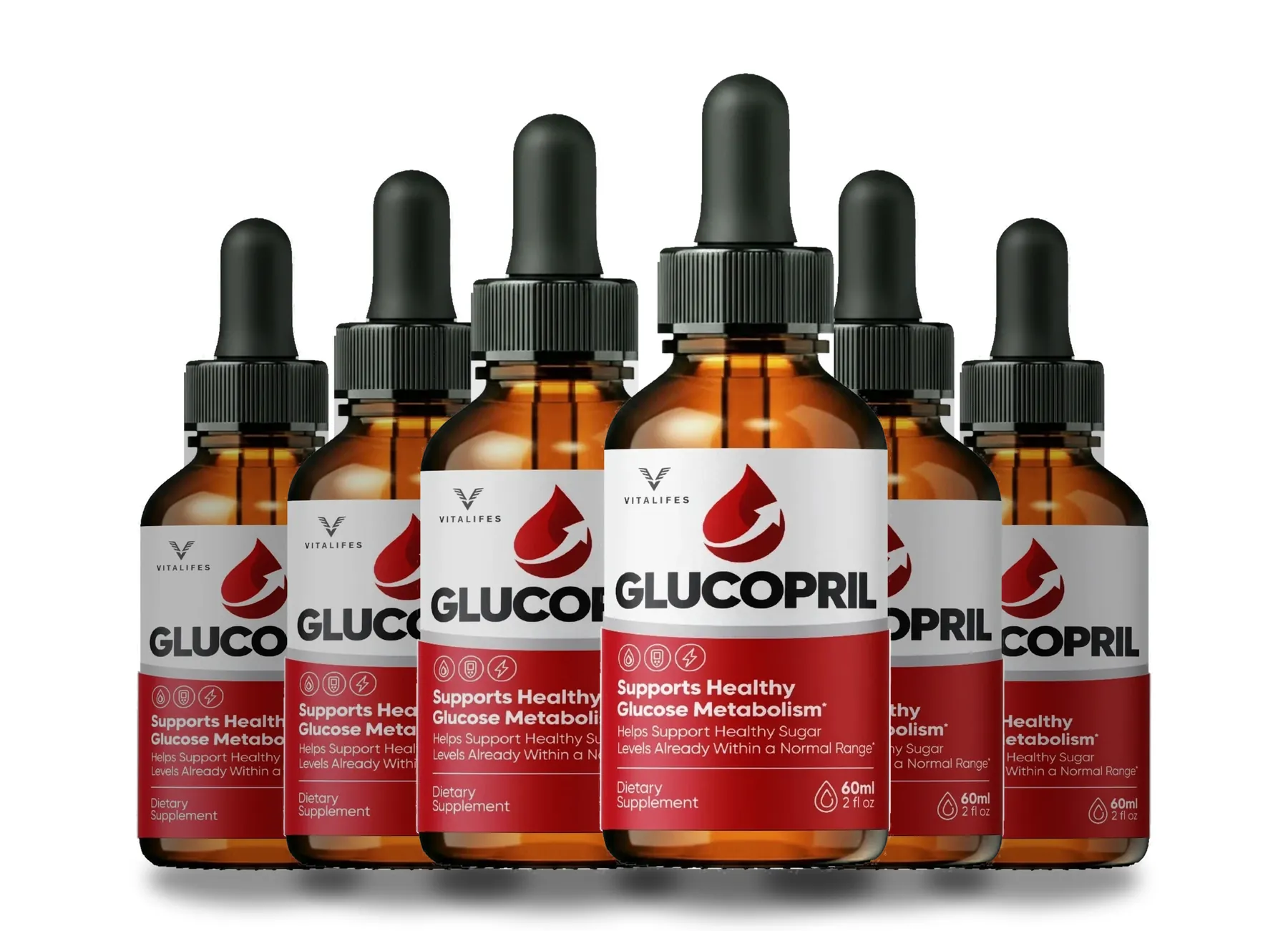
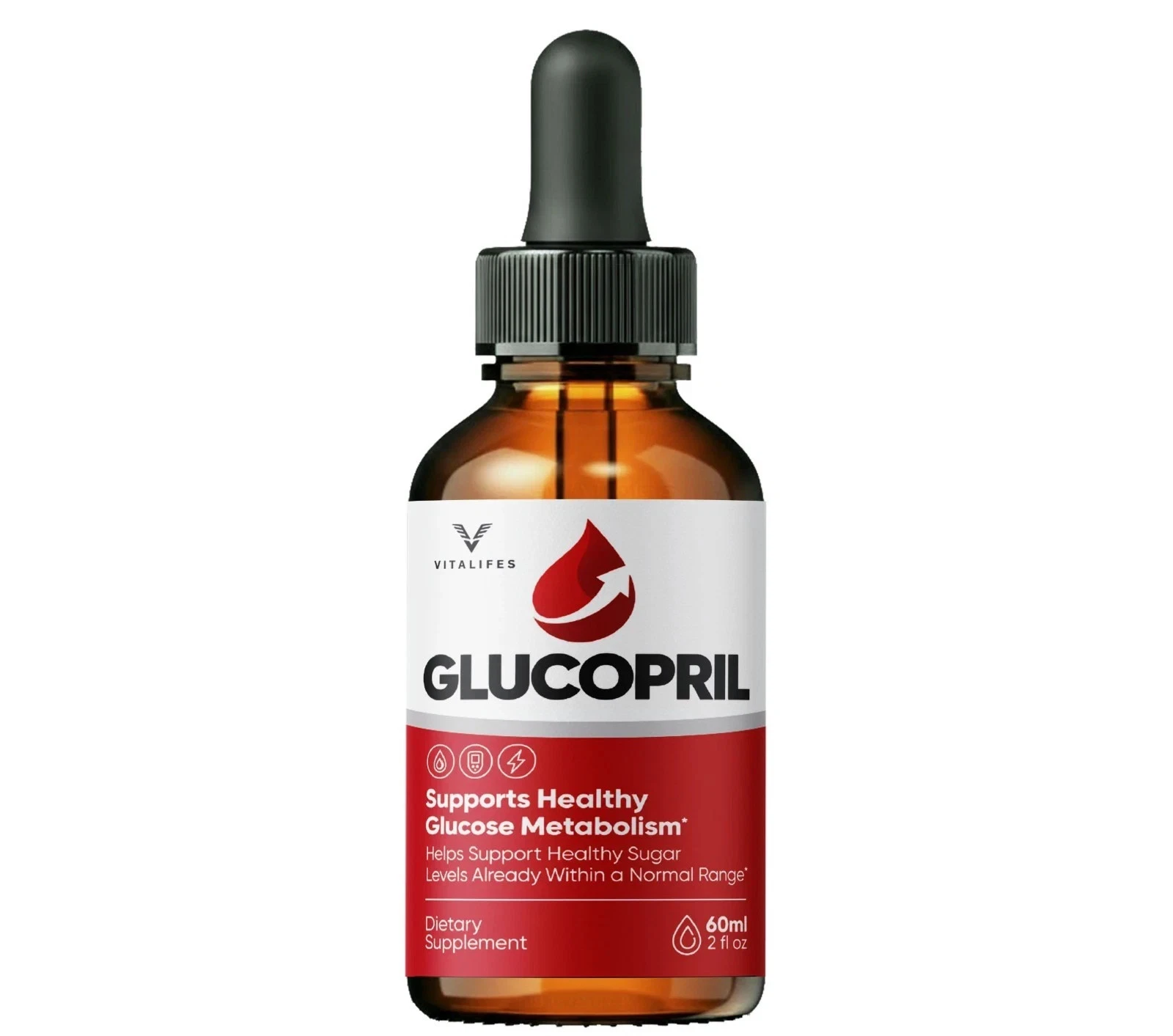
A drop from a standard pipette is somewhere near 0.05 ml, so two drops is roughly a tenth of a millilitre out of sixty. Whatever concentration the extracts are at, that is the volume doing the work. Marketplace reports describe the actives grouped in a proprietary blend of about 121 mg. That figure comes from those reports rather than from the bottle, and it is the total for all seven plants together.
Set that beside the preparations the trials used. The horse chestnut comparison ran at 600 mg a day of seed extract for four weeks. The two-year hawthorn trial used 900 mg a day. The Centella dose-ranging trial concluded that 180 mg a day beat 90 mg a day, which is a trial finding a difference inside the range this whole bottle is reported to occupy.
There is a fair counter-argument and it deserves stating. Liquid extracts can be concentrated well past a powder, some compounds absorb better in solution, and a proportion of a sublingual dose bypasses first-pass metabolism in the liver. Each of those is true in general. None of them is quantified for this product, because the strength of the extracts is not on the artwork. The how to use page covers the part of this a buyer can actually control, which is the size and consistency of the drop.
Questions about how GlucoPril works
How does GlucoPril work?
Two proposed chains. The plants in it have been studied for venous function, where they are measured by leg volume and capillary filtration, and one of them, grape seed, has been studied against fasting glucose with a pooled result of 2.01 mg/dL. The front panel sells the second chain and the ingredient list belongs to the first.
Does it lower blood sugar?
No, and no dietary supplement may claim to. The label says it supports healthy glucose metabolism and helps support healthy sugar levels already within a normal range. Those are structure and function statements about normal function, not a claim about a reading. NCCIH reviews what supplements have and have not shown here.
How long before a mechanism like this would show anything?
The shortest trial behind any of these plants ran four weeks and reported at the end of it. The timeline page sets the trial durations out side by side and suggests a way to test it on yourself.
Why does a blood sugar formula contain vein herbs?
This website treats that as the main question rather than a footnote. Six of the seven plants belong to the European venoactive tradition. The most likely explanation is a formula assembled from a circulatory template and sold under a glucose name.
Does the liquid form make it work faster?
A liquid can absorb faster than a tablet that has to disintegrate first. Faster is not the same as more, and none of these plants acts quickly in any case. The trials ran in weeks, not in hours.
Is there any trial of this finished product?
No trial of the finished blend has been published. Everything cited on this website is research on the individual plants, usually at single-plant doses much larger than the reported total for all seven here.
Sources for the GlucoPril mechanism
The trials, reviews and guidelines named above, in the order the plants appear on the artwork.
- De Sanctis MT, Belcaro G, Incandela L, et al. Treatment of edema and increased capillary filtration in venous hypertension with total triterpenic fraction of Centella asiatica: a clinical, prospective, placebo-controlled, randomized, dose-ranging trial. Angiology. 2001;52 Suppl 2:S55-9. PMID 11666125. https://pubmed.ncbi.nlm.nih.gov/11666125/
- Cesarone MR, Belcaro G, Rulo A, et al. Microcirculatory effects of total triterpenic fraction of Centella asiatica in chronic venous hypertension: measurement by laser Doppler, TcPO2-CO2, and leg volumetry. Angiology. 2001;52 Suppl 2:S45-8. PMID 11666123. https://pubmed.ncbi.nlm.nih.gov/11666123/
- Holubarsch CJ, Colucci WS, Meinertz T, et al. The efficacy and safety of Crataegus extract WS 1442 in patients with heart failure: the SPICE trial. Eur J Heart Fail. 2008;10(12):1255-63. PMID 19019730. https://pubmed.ncbi.nlm.nih.gov/19019730/
- Walker AF, Marakis G, Simpson E, et al. Hypotensive effects of hawthorn for patients with diabetes taking prescription drugs: a randomised controlled trial. Br J Gen Pract. 2006;56(527):437-43. PMID 16762125. https://pubmed.ncbi.nlm.nih.gov/16762125/
- Koch R. Comparative study of Venostasin and Pycnogenol in chronic venous insufficiency. Phytother Res. 2002;16 Suppl 1:S1-5. PMID 11933130. https://pubmed.ncbi.nlm.nih.gov/11933130/
- Bisler H, Pfeifer R, Kluken N, et al. [Effects of horse-chestnut seed extract on transcapillary filtration in chronic venous insufficiency]. Dtsch Med Wochenschr. 1986;111(35):1321-9. PMID 3527643. https://pubmed.ncbi.nlm.nih.gov/3527643/
- Boyle P, Diehm C, Robertson C. Meta-analysis of clinical trials of Cyclo 3 Fort in the treatment of chronic venous insufficiency. Int Angiol. 2003;22(3):250-62. PMID 14612852. https://pubmed.ncbi.nlm.nih.gov/14612852/
- Asbaghi O, Nazarian B, Reiner Z, et al. The effects of grape seed extract on glycemic control, serum lipoproteins, inflammation, and body weight: a systematic review and meta-analysis of randomized controlled trials. Phytother Res. 2020;34(2):239-253. PMID 31880030. https://pubmed.ncbi.nlm.nih.gov/31880030/
- Zhang H, Liu S, Li L, et al. The impact of grape seed extract treatment on blood pressure changes: a meta-analysis of 16 randomized controlled trials. Medicine (Baltimore). 2016;95(33):e4247. PMID 27537554. https://pubmed.ncbi.nlm.nih.gov/27537554/
- Foshati S, Nouripour F, Sadeghi E, Amani R. The effect of grape (Vitis vinifera) seed extract supplementation on flow-mediated dilation, blood pressure, and heart rate: a systematic review and meta-analysis of controlled trials with duration- and dose-response analysis. Pharmacol Res. 2022;175:105905. PMID 34798267. https://pubmed.ncbi.nlm.nih.gov/34798267/
- Feringa HH, Laskey DA, Dickson JE, et al. The effect of grape seed extract on cardiovascular risk markers: a meta-analysis of randomized controlled trials. J Am Diet Assoc. 2011;111(8):1173-81. PMID 21802563. https://pubmed.ncbi.nlm.nih.gov/21802563/
- Martinez-Zapata MJ, Vernooij RW, Simancas-Racines D, et al. Phlebotonics for venous insufficiency. Cochrane Database Syst Rev. 2020;11(11):CD003229. PMID 33141449. https://pubmed.ncbi.nlm.nih.gov/33141449/
- De Maeseneer MG, Kakkos SK, Aherne T, et al. Editor's Choice - European Society for Vascular Surgery (ESVS) 2022 clinical practice guidelines on the management of chronic venous disease of the lower limbs. Eur J Vasc Endovasc Surg. 2022;63(2):184-267. PMID 35027279. https://pubmed.ncbi.nlm.nih.gov/35027279/
- Gloviczki P, Lawrence PF, Wasan SM, et al. The 2023 Society for Vascular Surgery, American Venous Forum, and American Vein and Lymphatic Society clinical practice guidelines for the management of varicose veins of the lower extremities. Part II. J Vasc Surg Venous Lymphat Disord. 2024;12(1):101670. PMID 37652254. https://pubmed.ncbi.nlm.nih.gov/37652254/
- Santiago FR, Grillo L, Amore M, et al. Venoactive drugs in the management of chronic venous disease: a critical appraisal of the evidence and comparison with international guidelines. Vascul Pharmacol. 2026;163:107614. PMID 42066876. https://pubmed.ncbi.nlm.nih.gov/42066876/
- American Diabetes Association Professional Practice Committee. 6. Glycemic goals, hypoglycemia, and hyperglycemic crises: Standards of Care in Diabetes-2026. Diabetes Care. 2026;49(Suppl 1):S132-S149. PMID 41358894. https://pubmed.ncbi.nlm.nih.gov/41358894/
- Diabetes and Dietary Supplements: What You Need To Know. National Center for Complementary and Integrative Health, National Institutes of Health. https://www.nccih.nih.gov/health/diabetes-and-dietary-supplements
Order GlucoPril knowing what it is and is not for
Seven botanical extracts with a venous research record, two drops a day after a meal, and every claim on this website held to what the label prints.
Price at checkout · one payment, no subscription · money-back guarantee as printed at the checkout
Order GlucoPril On The Official Website2 drops a day after a meal · 60 ml a bottle · lot GLU-26/GL-2779