GlucoPril Official Website › Blog › Two Drops A Day
Two Drops A Day, And What To Actually Count
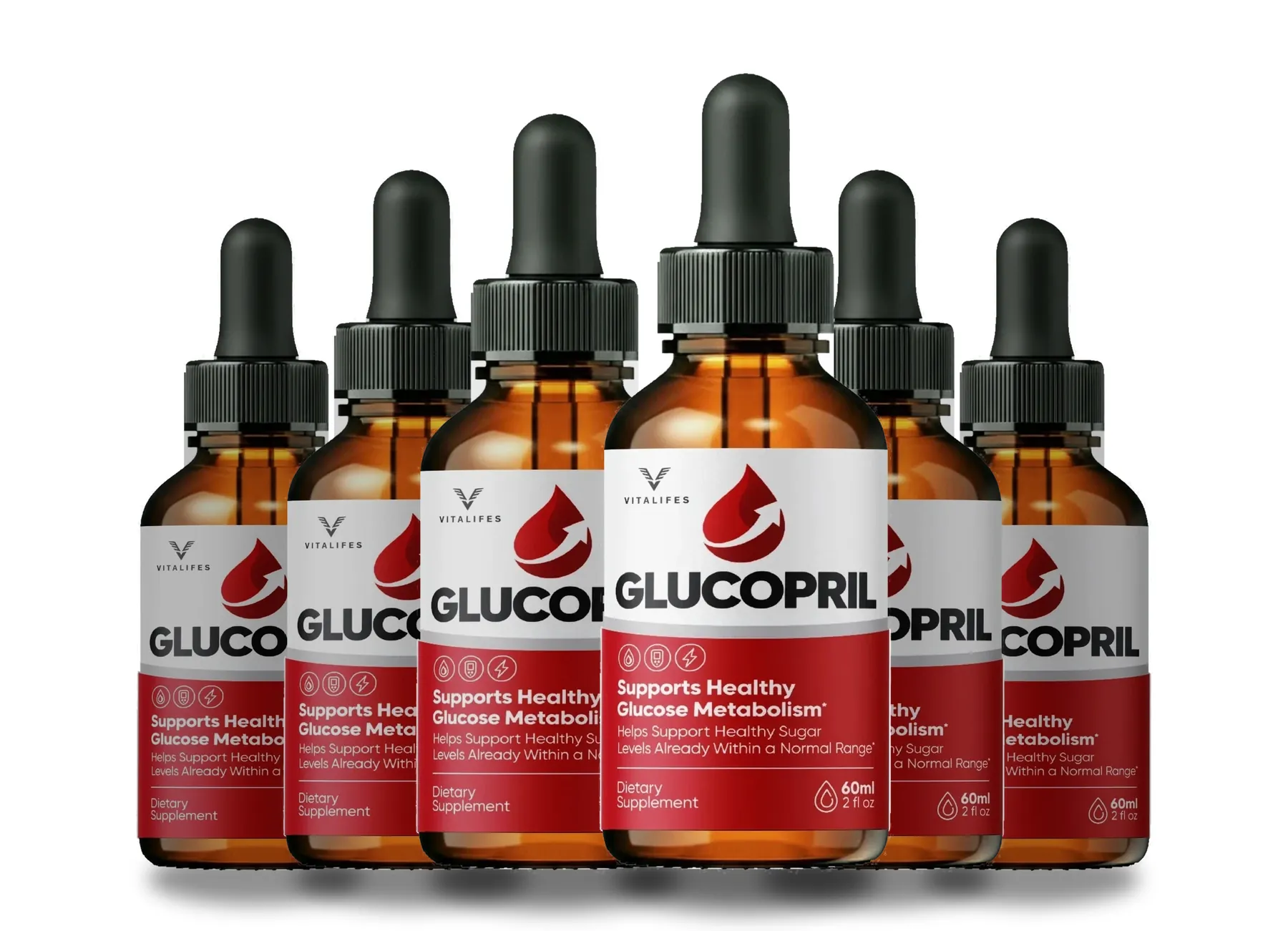
The instruction on this bottle is two drops daily after a meal. That is simple. Judging whether it did anything is not, because a fasting reading moves for five reasons before a supplement is even considered. Here is a twelve-week way to find out.

- The printed instruction is two drops daily after a meal, and the panel names consistency as the condition for judging it.
- A fasting reading moves with last night’s meal, sleep, illness, activity and the time the meter came out.
- The shorter trials behind these plants ran four weeks; one ran six months.
- Two fortnights of readings — one before, one at the end — beat twelve weeks of impressions.
- One variable at a time is the whole discipline, and it is the part most people skip.
What the panel actually says
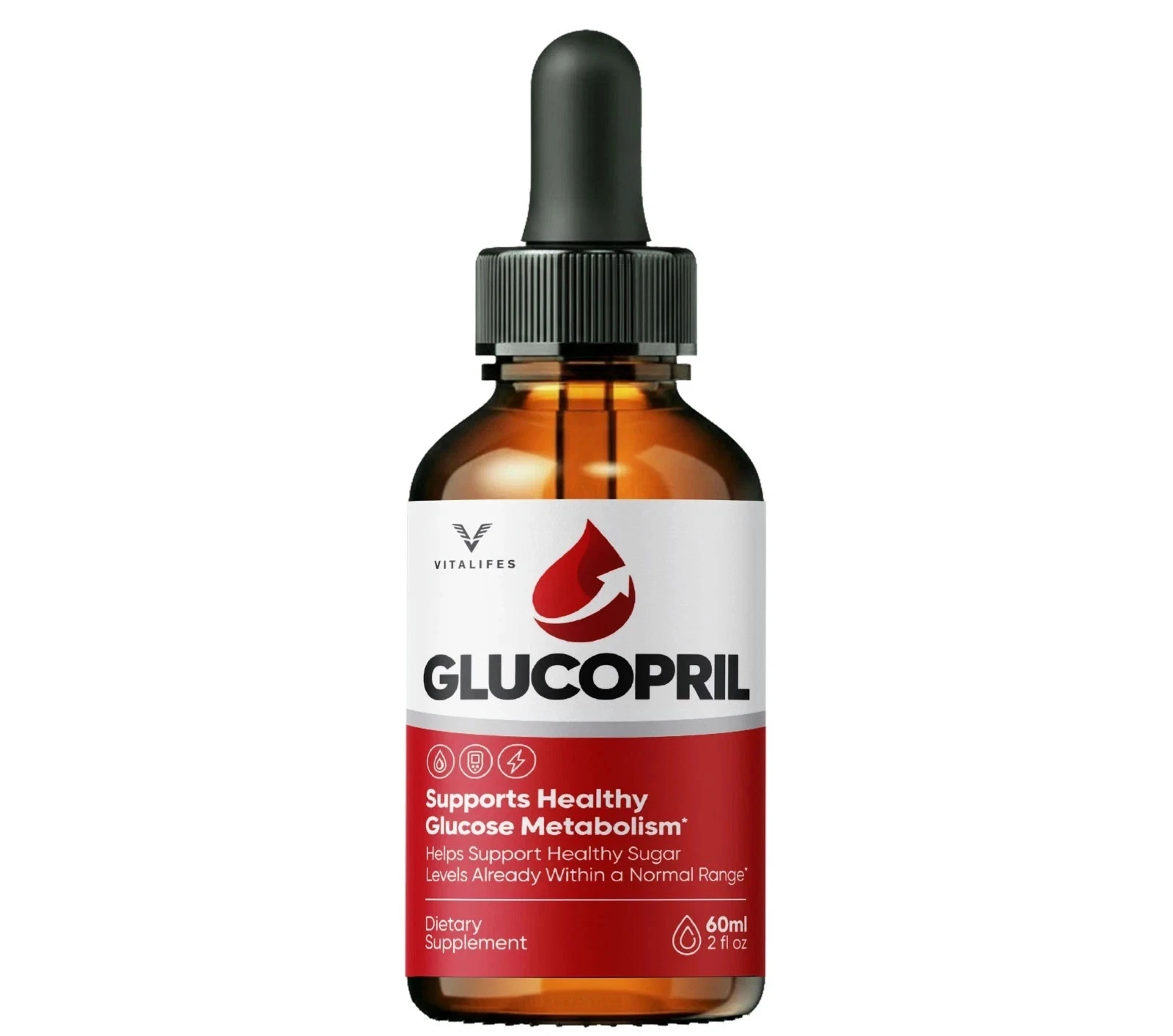
Word for word, the seller’s how-to panel reads: “Take 2 drops daily after meal for best results”. A second line adds: “Best results when taken consistently every day”.
Two things are worth noticing about that. The first is that it names a meal rather than an hour, which leaves the timing to you as long as it is attached to eating. The second is that the panel itself puts consistency at the centre, which is unusual and sensible: nothing in the literature behind these plants produced an effect in a week.
What the panel does not say is how much of anything two drops delivers, because no amount is given for any of the seven extracts. That absence is what makes a measurement plan worth more here than it would be on a product with a full panel: your own numbers are the only evidence available to you.
Why an impression is not an answer
Ask somebody at the end of two months whether a supplement helped and you will get an honest answer that is almost worthless. Memory smooths, recency dominates, and whatever happened in the last four days becomes the story of the whole period.
That is not a failing of character. It is how recall works, and it is why clinical trials record measurements rather than ask participants how they felt about it afterwards.
MedlinePlus's blood glucose topic sets out what the common tests actually measure, which is the first thing worth understanding before judging anything against them. A fasting reading, a post-meal reading and an HbA1c answer three different questions over three different timescales.
The five things that move the number anyway
Before adding anything, it is worth seeing what you are measuring against. This is the table that decides whether a personal trial produces an answer or a mood.
| What also moves a fasting reading | Rough size of the effect | How to handle it |
|---|---|---|
| Last night’s meal, and how late it was | Substantial | Note it. Do not try to standardise your life; just record what happened. |
| Sleep, and especially a short night | Substantial | One line a day. Patterns show up over twelve weeks that are invisible over three. |
| Illness, including a minor one | Can be large | Mark the days. Do not delete them, and do not average them in silently. |
| Physical activity in the previous day or two | Substantial | A step count or a simple note. This is one of the large levers. |
| Time of day and how long since eating | Large if it varies | Take readings the same way every time. This is the one you can actually control. |
| The supplement | Unknown, and unstated on this label | The variable you are testing. |
Five things that move the number, and one you are trying to measure against them. That ratio is the reason a two-week trial answers nothing.
The fifth row is the one you can control completely and the one most often got wrong. A reading taken at seven on Monday and half past nine on Thursday is two different measurements wearing the same name.
The behavioural chapter of the 2026 Standards of Care runs to more than forty pages on eating pattern, activity, sleep and weight, and it is the clearest public statement of how large those levers are. A supplement is being tested against all of them at once.
A twelve-week plan, week by week
Nothing in this plan is clever. Its whole value is that it changes one thing and measures at both ends, which is the design every trial in the reference list below used.
| Weeks | What to do | What to record |
|---|---|---|
| The week before you start | Nothing new. Change nothing else. | A baseline: fasting readings on the same three mornings, and a note on sleep, meals and walking. |
| Weeks 1–2 | Two drops daily after the same meal each day. | Whether the habit survived. Tolerance. Nothing else is expected this early. |
| Weeks 3–4 | Same routine, unchanged. | The same three mornings a week. This is the span the shorter trials behind these plants ran for. |
| Weeks 5–8 | Same routine. Resist adding anything else. | Readings, plus end-of-day leg heaviness if that is a complaint you have. |
| Weeks 9–12 | Same routine to the end of the run. | The final fortnight of readings, compared against the baseline fortnight rather than against a memory. |
Twelve weeks, one variable, and two fortnights of readings at either end. That is the whole design.
- Change one variable. If you start walking more in week four, the experiment is over.
- Take readings the same way every time: same rough hour, same interval since eating, same device.
- Three mornings a week is enough. Daily readings add noise and drop-out risk without adding signal.
- Write the confounders down beside the numbers. A bad night’s sleep explains a lot of otherwise puzzling mornings.
- Compare fortnight to fortnight, not day to day.
- Do not stop early because week two was unremarkable. Week two is supposed to be unremarkable.
Order GlucoPril and start the count on day one
Two drops a day after a meal, a baseline fortnight before you open the bottle, and a comparison at twelve weeks against numbers rather than against a memory.
Price at checkout · one payment, no subscription · money-back guarantee as printed at the checkout
Order GlucoPril On The Official Website2 drops a day after a meal · 60 ml a bottle · lot GLU-26/GL-2779
What to measure, and what to leave alone
Measure what you can measure the same way twice. For most people reading this that means a fasting reading from a home meter, taken on the same three mornings each week.
If end-of-day leg heaviness is something you actually experience, measure that too, because it is what most of the plants on this label were trialled for. A simple nought-to-ten score written at the same hour each evening is enough, and it is more sensitive than it sounds.
Leave HbA1c alone unless somebody is already ordering it for you on a schedule. It reflects roughly the previous three months, which makes it a poor instrument for a twelve-week test that starts today. The ADA's glycaemic goals chapter explains what it is for and why targets differ between people.
The one thing not to measure
How you feel about the bottle. Enthusiasm in week one and disappointment in week three are both real experiences and neither is data. Record them if you like, in a separate column, and do not let them end the run.
Getting two consistent drops out of a pipette
A drop is not a fixed unit. Its size varies with how full the pipette is, how hard the bulb is squeezed, how the pipette is held and how warm the room is. Over twelve weeks that variation is worth reducing.
Three habits do most of the work. Hold the pipette vertical rather than at an angle. Let drops fall under their own weight instead of squeezing them out. And draw roughly the same amount into the pipette each time, because a nearly-empty one behaves differently from a full one.
The dosing page covers the technique in more detail, including where a glass dropper bottle should and should not be stored.
Why twelve weeks and not three
Because the research behind these plants took at least that long to measure anything. The gotu kola dose-ranging trial ran four weeks. The horse chestnut comparison ran four weeks at 600 mg a day. The gotu kola trial in diabetic microangiopathy ran six months.
The distributor’s own reviewers describe waiting 4–8 weeks, which lands in the same region. Twelve weeks is long enough to cover the shorter trial durations twice over and to average out a bad fortnight.
It is also longer than most guarantee windows in this category, which is a real tension and worth naming. The timeline page sets the judgement window against the refund window and says plainly that they are different lengths.
Reading your own result at the end
At week twelve, compare the first fortnight of readings against the last fortnight. Not the best day against the worst day, and not your impression of the period.
Three outcomes are possible and all three are useful. A clear difference larger than the week-to-week scatter is a reason to continue. No difference is a reason to stop, and it is an answer rather than a failure. A difference smaller than the scatter means the experiment could not resolve it, which usually means the scatter needs reducing before the question can be asked again.
NCCIH's guidance on using supplements wisely makes the same point in more general terms: a supplement is worth judging on evidence you gathered, and the alternative is judging it on how the label made you feel.
Whether anything here interacts with a prescription you already take. That is a conversation with whoever set the dose, and it belongs before week one rather than after week twelve.
References
- American Diabetes Association Professional Practice Committee. 5. Facilitating positive health behaviors and well-being to improve health outcomes: Standards of Care in Diabetes-2026. Diabetes Care. 2026;49(Suppl 1):S89-S131. PMID 41358898. https://pubmed.ncbi.nlm.nih.gov/41358898/
- American Diabetes Association Professional Practice Committee. 6. Glycemic goals, hypoglycemia, and hyperglycemic crises: Standards of Care in Diabetes-2026. Diabetes Care. 2026;49(Suppl 1):S132-S149. PMID 41358894. https://pubmed.ncbi.nlm.nih.gov/41358894/
- Blood Glucose. MedlinePlus, U.S. National Library of Medicine. https://medlineplus.gov/bloodglucose.html
- De Sanctis MT, Belcaro G, Incandela L, et al. Treatment of edema and increased capillary filtration in venous hypertension with total triterpenic fraction of Centella asiatica: a clinical, prospective, placebo-controlled, randomized, dose-ranging trial. Angiology. 2001;52 Suppl 2:S55-9. PMID 11666125. https://pubmed.ncbi.nlm.nih.gov/11666125/
- Koch R. Comparative study of Venostasin and Pycnogenol in chronic venous insufficiency. Phytother Res. 2002;16 Suppl 1:S1-5. PMID 11933130. https://pubmed.ncbi.nlm.nih.gov/11933130/
- Using Dietary Supplements Wisely. National Center for Complementary and Integrative Health, National Institutes of Health. https://www.nccih.nih.gov/health/using-dietary-supplements-wisely