GlucoPril Official Website › Blog › Butcher's Broom
Butcher's Broom, A Cochrane Review, And Diabetic Retinopathy
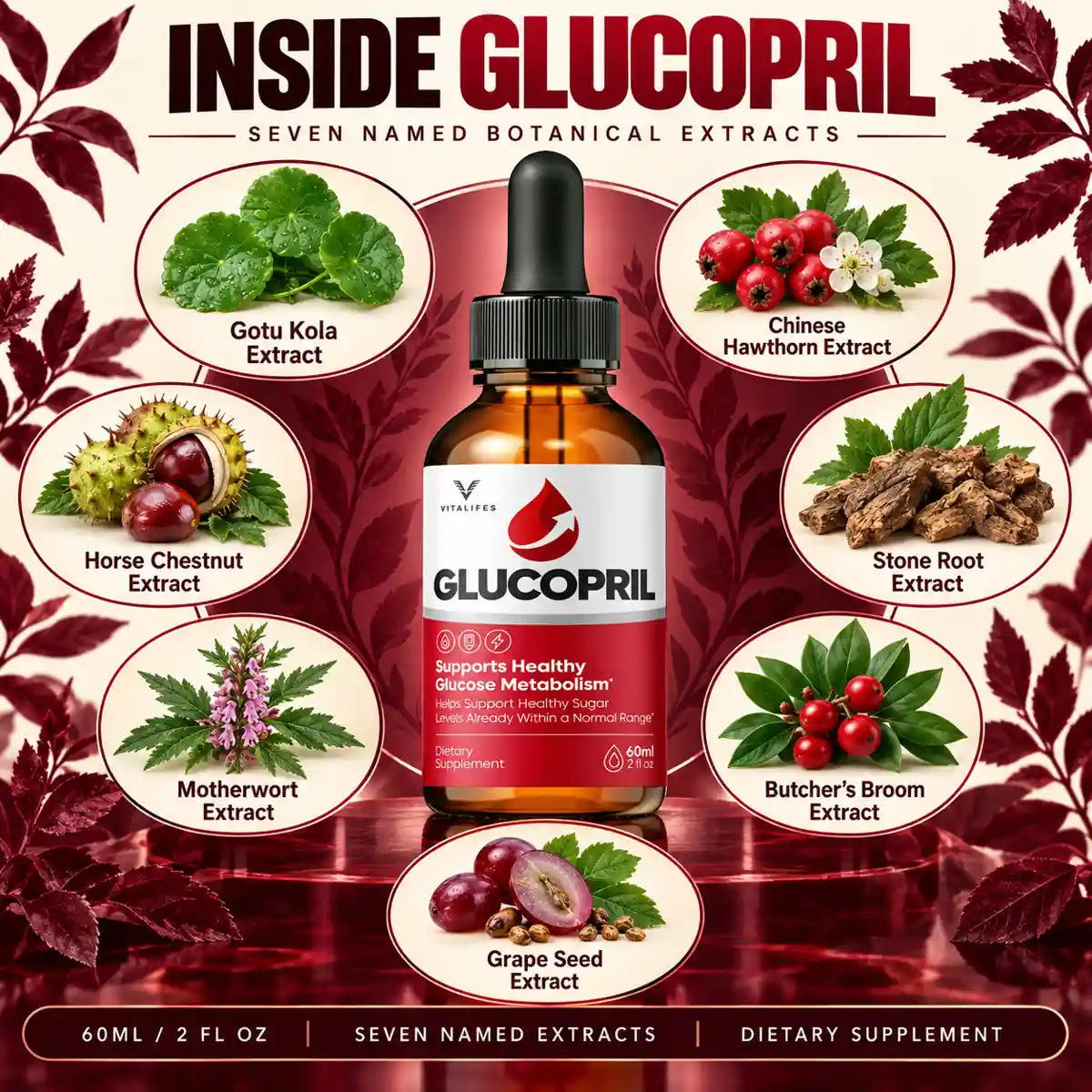
Butcher’s broom is the sixth extract on this bottle’s ingredient graphic, and it is the one plant on the whole label that has actually been tested, somewhere in its trial history, against a diabetes eye complication. A Cochrane review covered that trial. It is worth reading exactly what the review concluded.
- A 2018 Cochrane review of single herbal medicines for diabetic retinopathy included a Ruscus (butcher's broom) extract tablet among ten trials covered.
- None of the ten trials reported the review's primary outcome, progression of retinopathy.
- The review's overall conclusion: no conclusions could be drawn about the effect of any single herb on diabetic retinopathy.
- Butcher's broom's own dedicated trial literature is about chronic venous insufficiency — leg symptoms — almost always studied at 150 mg per capsule alongside two companion ingredients.
- That venous trial literature is real and reasonably sized. The retinopathy question is a genuinely open one, not a quietly positive one.
What butcher's broom is, and its two separate research threads
Ruscus aculeatus, butcher's broom, is a low evergreen shrub native to the Mediterranean, traditionally used for haemorrhoids and heavy, aching legs. Modern research on the plant has followed almost entirely from that traditional venous use, nearly always as part of a fixed combination with hesperidin methylchalcone and vitamin C rather than as a standalone extract.
That combination has a real, sizeable clinical literature behind it for venous symptoms. Separately, and much more narrowly, one of the trials in that combination's literature was later swept into a Cochrane review of herbal treatments for diabetic retinopathy — damage to the retina from diabetes, a completely different organ system from the veins the plant is normally studied for. Those two threads are worth keeping distinct, and this article works through both.
The venous insufficiency trial: 150 mg, two companions, eight weeks
A prospective, multicentre clinical study gave 124 patients with chronic venous insufficiency two capsules a day, each capsule containing Ruscus aculeatus 150 mg, hesperidin methylchalcone 150 mg and ascorbic acid 100 mg, for eight weeks. The results: pain, heaviness, cramps and oedema, all intensely reported at baseline by 74–85% of patients, fell to 8–20% by the end of treatment, with improvement beginning as early as the second week. Capillaroscopy — direct imaging of the skin's capillaries — also showed measurable changes, described by the authors as the first time morphological capillary change had been observed following this kind of intervention.
This is a real, reasonably sized clinical result for its intended purpose: leg symptoms in chronic venous insufficiency. It says nothing about blood sugar, and the trial was never designed to.
The Cochrane review, and what it actually covered
A 2018 Cochrane review, “Single herbal medicine for diabetic retinopathy,” set out to evaluate the effectiveness and harm of any single herb as a treatment for people with diabetic retinopathy, searching CENTRAL, MEDLINE, Embase and several Chinese clinical-trial databases through June 2018. It included ten randomised or quasi-randomised trials covering 754 participants, nine run in China and one in Poland. In every included study, both the herbal and comparison groups also received standard conventional treatment for diabetic retinopathy.
The six single herbs or extracts covered across those ten trials were: a Ruscus extract tablet, Sanqi Tongshu capsule, tetramethylpyrazine injection, Xueshuantong injection, Puerarin injection and Xuesaitong injection. Butcher's broom is the only one of the six that also appears on this bottle's ingredient list.
| What the review looked for | What it actually found |
|---|---|
| Progression of diabetic retinopathy (the primary outcome) | Reported by none of the ten included studies |
| Visual acuity gain of two or more lines | Higher with herbal add-on across five trials, but rated low-certainty evidence |
| Microaneurysms and haemorrhages | One trial (a different herb) suggested a reduction, rated very low-certainty |
| HbA1c | Little effect seen in a pooled analysis of two trials of a different herb |
| Overall risk of bias across all ten trials | Rated high, mainly for lack of blinding |
The review's own authors' conclusion, stated plainly: “No conclusions could be drawn about the effect of any single herb or herbal extract on diabetic retinopathy from the current available evidence.”
That is the entire, unambiguous verdict. Not a promising early signal, not a modest positive finding — a statement that the evidence available, across all six herbs including the Ruscus extract this bottle names, does not support any conclusion in either direction. The review specifically noted it was difficult to exclude a placebo effect, since none of the ten trials used a placebo control.
Order GlucoPril with the Cochrane verdict in front of you
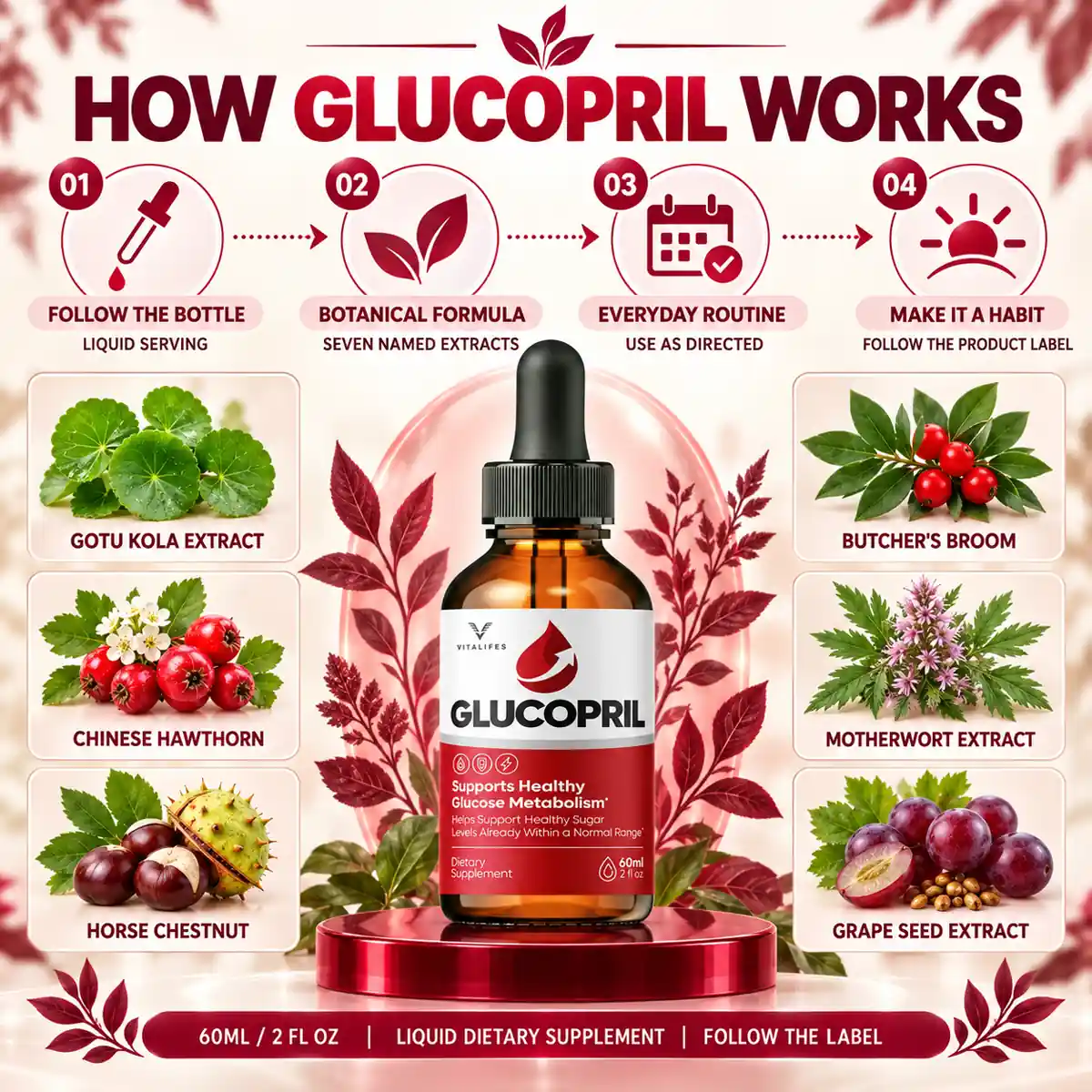
Seven named botanical extracts, two drops a day after a meal, and a website that prints what the strongest available review actually concluded rather than what a front panel implies.
Price at checkout · one payment, no subscription · money-back guarantee as printed at the checkout
Order GlucoPril On The Official Website2 drops a day after a meal · 60 ml a bottle · lot GLU-26/GL-2779
Diabetic retinopathy, and why it matters to this bottle specifically
Diabetic retinopathy is damage to the blood vessels of the retina caused by prolonged high blood sugar, and it is one of the leading causes of vision loss worldwide in adults of working age. It is a genuinely important complication to study, which is exactly why the absence of a clear answer in the Cochrane review is worth taking seriously rather than glossing over. This is the single closest thing in this bottle's entire ingredient list to a trial connecting one of its plants to an actual diabetes complication, and the honest verdict on it is: unresolved, on weak evidence, with no placebo control across any of the ten trials.
That is a meaningfully different situation from the rest of this bottle's ingredients, most of which have never been tested against any diabetes-related outcome at all. Butcher's broom is the one plant that came closest, and came away with an explicit “no conclusions can be drawn” rather than either a positive or negative result.
Reading a Cochrane “no conclusions” verdict correctly
It is worth spending a moment on what a Cochrane review's “no conclusions could be drawn” verdict does and does not mean, because it gets misread in both directions surprisingly often. It does not mean the treatments studied were shown to be ineffective — that would require a well-powered, low-bias trial reporting a clear negative result, which is a different finding from an absence of usable evidence. It also does not mean the treatments are quietly effective and merely under-studied in a way that favours them — the review's low-certainty, high-risk-of-bias, no-placebo-control description applies equally in both directions. The honest reading is the narrowest one: the ten trials that exist do not, collectively, let anyone draw a conclusion either way, and more and better trials would be needed to answer the question the review set out to answer.
This is precisely the situation where marketing language and research language diverge the most. A sales page can accurately write “studied for diabetic eye health” on the strength of a single trial's inclusion in a Cochrane search, while the review covering that exact trial explicitly declines to draw any conclusion from it. Both statements can be true at once, which is exactly why reading the review itself, rather than a summary of its existence, matters here.
Setting the studied dose beside this bottle
The venous-insufficiency dose that produced butcher's broom's best clinical results was 150 mg of Ruscus aculeatus per capsule, taken twice daily — 300 mg a day — alongside 150 mg of hesperidin methylchalcone and 100 mg of ascorbic acid per capsule. Marketplace reports describe this bottle’s entire seven-plant blend at a combined total of about 121 mg, with no separate figure for butcher's broom and no hesperidin methylchalcone or ascorbic acid co-ingredient at all.
Even setting aside the retinopathy question entirely and looking only at the venous evidence butcher's broom is actually best supported for, the dose gap between 300 mg of a single standardised extract with two supporting compounds and a share of a 121 mg seven-plant total is substantial.
The seller names seven extracts and gives a weight for none of them. Where a dose exists in the published research, this site prints it beside the plant, and butcher's broom's best-known dose is 150 mg of Ruscus per capsule alongside two named companion compounds — not something this bottle's blend total can match on its own.
What the honest summary of both threads looks like
Two separate, honest conclusions follow from the two separate research threads.
On chronic venous insufficiency — heavy, aching, swollen legs — butcher's broom has a real clinical literature, almost always studied in combination with two companion compounds this bottle does not name, and almost always at doses well above what a seven-plant, 121 mg total blend could deliver of any one ingredient.
On diabetic retinopathy — the eye complication that actually touches this bottle's blood-sugar framing — the strongest available evidence review found the question genuinely open, not answered, for butcher's broom or for any of the five other herbs it was reviewed alongside.
A dietary supplement for healthy adults of 18 and over, not a medicine and not FDA-approved. The label's own claim is limited to supporting healthy glucose metabolism already within a normal range, not to treating any diagnosed complication of diabetes. Diabetic retinopathy is diagnosed and monitored by an eye care professional, and anyone with diabetes should keep to their scheduled eye examinations regardless of any supplement in use. The side effects page covers the interactions worth raising before a first bottle.
Three questions before reading “studied for diabetes” as a claim
- Was the primary outcome actually reported? In the Cochrane review here, the primary outcome — retinopathy progression — was reported by none of the ten trials.
- Was there a placebo control? None of the ten trials in this review had one, which is exactly why the review could not exclude a placebo effect.
- What did the review's own authors conclude, in their own words? Here: no conclusions could be drawn. That sentence is the whole finding, not a caveat attached to a positive result.
On this bottle, butcher's broom's honest answers run: no, no, and an explicit non-finding. The ingredients page runs a version of the same questions across the other six extracts.
References
- Zhang HW, Zhang H, Grant SJ, Wan X, Li G. Single herbal medicine for diabetic retinopathy. Cochrane Database Syst Rev. 2018;12(12):CD007939. PMID 30566763. Ten trials, 754 participants; a Ruscus extract tablet was one of six herbal interventions studied; no trial reported the review's primary outcome of retinopathy progression; authors' conclusion: no conclusions could be drawn about the effect of any single herb. https://pubmed.ncbi.nlm.nih.gov/30566763/
- Aguilar Peralta GR, Arevalo Gardoqui J, Llamas Macias FJ, et al. Clinical and capillaroscopic evaluation in the treatment of chronic venous insufficiency with Ruscus aculeatus, hesperidin methylchalcone and ascorbic acid in venous insufficiency treatment of ambulatory patients. Int Angiol. 2007;26(4):378-84. PMID 18091707. Dose: Ruscus aculeatus 150 mg, hesperidin methylchalcone 150 mg, ascorbic acid 100 mg per capsule, two capsules a day for 8 weeks in 124 patients with chronic venous insufficiency. https://pubmed.ncbi.nlm.nih.gov/18091707/