GlucoPril Official Website › Blog › Lot Codes
What A Lot Code Cannot Tell You About A Botanical Bottle
Every GlucoPril bottle carries a lot code on its base, and this desk’s paperwork carries a certificate reference to go with it. Both are useful. Neither says what is in the glass. The batch page on this website explains what the lot code proves. This article goes at the harder question underneath it: what do studies of herbal products actually find when somebody tests the plant on the label against the plant in the bottle?
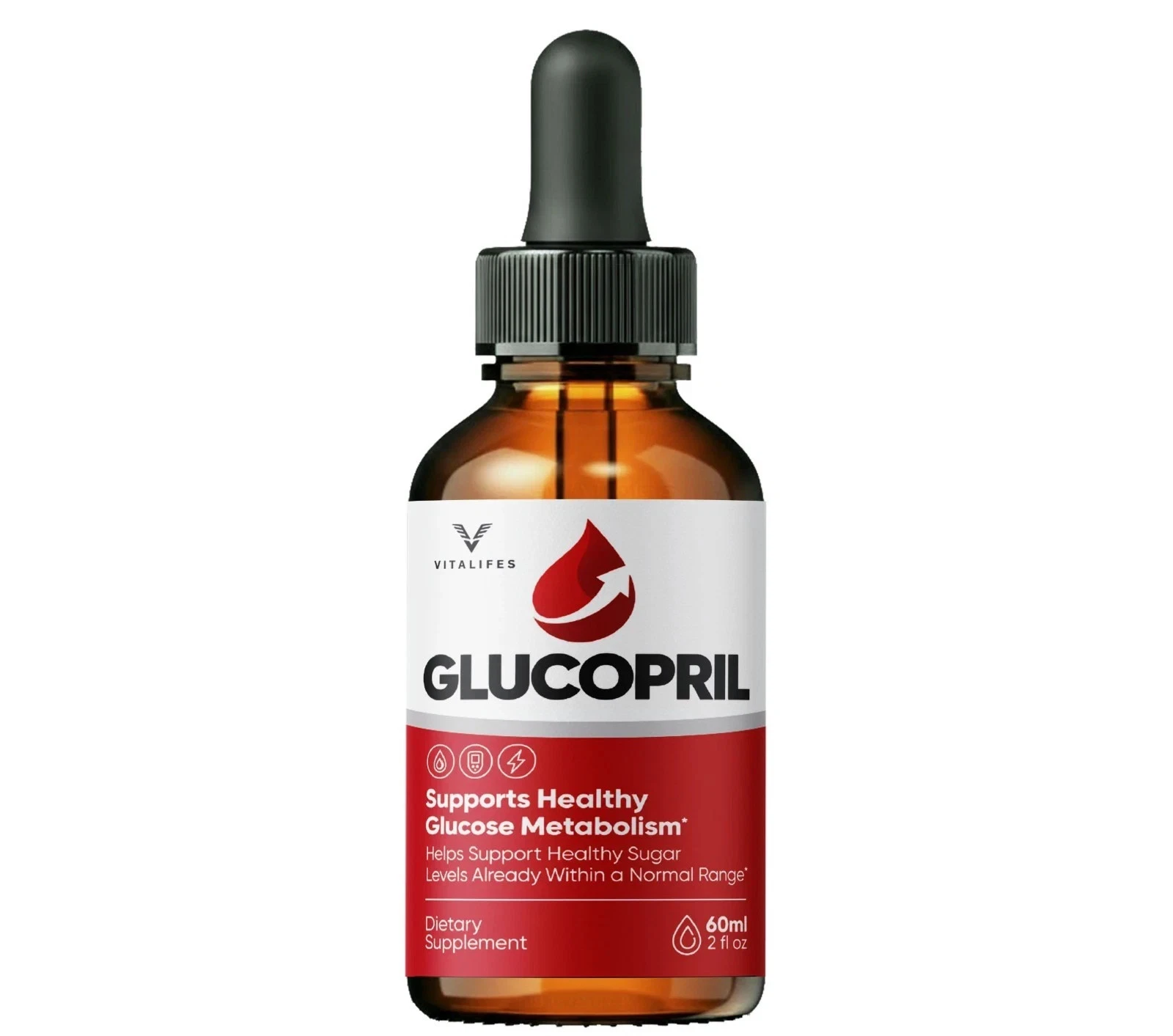
- A lot code identifies a production run so a problem can be traced. It is not a test result, and the certificate reference for this batch, GLU-2779-26-GL, is a filing reference on the distributor’s paperwork rather than a published laboratory report.
- The US manufacturing rule for supplements, 21 CFR 111.75, requires a manufacturer to test the identity of every dietary ingredient before use. A supplier’s certificate of analysis may stand in only for other components, and only under conditions.
- A 2019 synthesis of DNA-based studies covering 5,957 herbal products from 37 countries found 27% adulterated against their labelled species. It is not a random sample of shelves, and the figure should be read that way.
- A 2023 study of “Brahmi” products, a name applied to both Bacopa monnieri and gotu kola, found only 22.2%, 55.6% or 50.0% of market samples positive for Brahmi depending on the method.
- In the other direction, an 80-product US analysis of supplements labelled for blood sugar management found none adulterated with any of 19 tested drugs. Both facts belong in the same paragraph.
What the pack does print
Three printed items bear on this. On the base of the bottle is lot GLU-26/GL-2779, sometimes with a best-before date beside it. On the distributor’s paperwork is a certificate reference, GLU-2779-26-GL. And on the seller’s separate ingredient graphic, not on the bottle itself, are seven plant names with no amounts. That is the whole of what a buyer can hold in their hand.
The lot code does one honest job: it ties the bottle to a production run, so that if something is found to be wrong with that run it can be traced and withdrawn. The certificate reference is an index number a person at the order desk can quote. Both are described on the batch verification page, which says plainly that they are filing references and not laboratory results, and the testing and quality page audits the four seals on the pack the same way.
What neither of them can do is say that the plant named on the graphic is the plant that went into the liquid, or how much of it is there. Those are questions about identity and strength, and identity is the one that has the most published research behind it, which is where this article goes.
What the manufacturing rule asks of a maker
It helps to know what a manufacturer is supposed to be doing before looking at what studies find. In the United States, dietary supplement manufacturing is governed by Title 21 of the Code of Federal Regulations, Part 111, and the section that matters here is 111.75, headed “What must you do to determine whether specifications are met?”.
Three of its requirements are relevant. Before using a component that is a dietary ingredient, the manufacturer must conduct at least one appropriate test or examination to verify its identity, unless the agency has granted a petition for an exemption. For other components, the manufacturer may either test or rely on a supplier’s certificate of analysis, but only if it has first qualified the supplier by confirming the certificate’s reliability, and the certificate must describe the test methods, the limits and the actual results. And for finished batches, or a statistically sampled subset of them, the manufacturer must verify that the batch meets its specifications for identity, purity, strength and composition and for limits on contamination.
Read that again from a buyer’s side. The rule puts the identity test on the maker, for each botanical ingredient, before it is used, and it does not allow a paper certificate to replace it for a dietary ingredient. That is a sensible rule. It is also an internal quality control requirement. Nothing in that section obliges anyone to publish the results, and nothing in it means a bottle has been checked by anyone outside the company before sale; dietary supplements are not approved by the FDA before they are sold, which is why every label says so. So a buyer is trusting a system they cannot see, which is why the published outside studies are worth reading.
What studies find when they test herbal products
The most-cited attempt to put a number on this is a 2019 analysis in Frontiers in Pharmacology. Its author gathered published studies that had used DNA-based methods to check herbal products against their labels: 5,957 commercial products sold in 37 countries across six continents. Across the whole set, 27% were adulterated when their contents were tested against the labelled species. The proportion varied widely by region, from 79% in Australia and 67% in South America to 33% in North America and 23% in Asia. Among nine countries with more than 100 products each, the figure for the USA was 29%. The adulterated products contained undeclared contaminant, substitute or filler species, or none of the labelled species at all.
Two honest reading notes. First, it is a synthesis of published studies, and studies of this kind often go looking where they already suspect a problem. The abstract does not say the products were chosen at random, so 27% describes the studies analysed and should not be quoted as a rate for the shelf at your pharmacy. Second, DNA methods report species, not potency. They are good at telling you a plant is not the one on the label and much less able to tell you how much active material is present. A 2020 review of DNA-based authentication notes that identifying the plant material in finished dietary supplements, which come in many formulations, is often a research challenge in its own right.
A word on a paper you may have met while searching. A widely quoted 2013 study of North American herbal products, also based on DNA barcoding, was retracted by its publisher in 2024. This article does not use it and would suggest treating any number attributed to it with suspicion.
A second review, published in Drug Safety in 2017, looks upstream at the raw herbal trade. It reports that the international trade in herbal products has grown around fifteen per cent a year, that most raw material is sourced from South and Southeast Asia, and that of the roughly 8,000 medicinal plant species harvested from the wild in India, about 960 are in active trade. Its subject is species adulteration and admixture in that raw trade, its drivers, and its consequences for consumers, and it proposes an authentication service to help regulate the market.
None of this is about one product. It describes a supply chain in which substitution is a known risk, and in which identity testing at the manufacturer is the control that is meant to catch it.
Order GlucoPril and keep the lot code with the receipt
A 60 ml bottle, two drops a day after a meal, a lot code on the base that ties it to a production run, and a website that says plainly what a lot code does not prove.
Price at checkout · one payment, no subscription · money-back guarantee as printed at the checkout
Order GlucoPril On The Official Website2 drops a day after a meal · 60 ml a bottle · lot GLU-26/GL-2779
Label accuracy, tested by mass spectrometry
Identity by DNA is one lens. Another is to buy products, analyse them, and compare the result with the Supplement Facts label. A 2022 case series in JAMA Network Open did exactly that for 30 dietary supplements marketed to support the immune system, all bought from one online marketplace in May 2021 and analysed by liquid chromatography and mass spectrometry. Thirteen of the 30 had accurate labels. Of the 17 that did not, 13 listed ingredients that were not detected at all, and nine contained substances that were not on the label. No product carried a third-party certification seal.
Keep the limits in view. Thirty products chosen and bought by the researchers is a case series, not a survey, and immune-health supplements are a different category with different ingredients. It would be a mistake to stretch it into a claim about botanical drops for glucose. It belongs in the same way of thinking: a label is a claim, and a claim can be tested, and when independent groups have tested it, they have often found gaps.
It is also a fair reminder that the two claims on a supplement bottle’s front, and the list on the graphic, are statements by the seller. That is the theme of the article on labels with no amounts, and it is why this site prints the dose the trials used rather than pretending the label gave one.
Blood sugar products in particular
For a bottle sold in the blood sugar aisle, the specific worry is different: not a wrong plant, but a hidden drug. The paper below opens by noting that many supplements with blood-sugar label statements are sold over the Internet, and that possible adulteration with prescription drugs, some of them withdrawn from the market after adverse events, is a concern. That concern is exactly why one group built a test for it.
A 2018 paper in Drug Testing and Analysis developed and validated an LC-MS/MS method to detect and measure 14 anti-diabetic drugs, two anti-obesity drugs and three cholesterol-lowering drugs in botanical supplements marketed for blood sugar management. Applying it to 80 supplements obtained in the USA that carried blood-sugar-related label statements, the authors found none adulterated with any of the 19 drugs. Two products obtained outside the USA and already known to be adulterated were run as a check and were found to contain phenformin, glibenclamide and sibutramine.
That is a reassuring result and it deserves equal billing with the studies above. It says that in one careful analysis of US-sold blood-sugar botanicals, the specific fear of undeclared prescription drugs was not borne out. It also has limits: 80 products, one panel of 19 named drugs, a single time point, and nothing about whether the plants on those labels were the plants in the bottles. Different questions get different answers, and a supply chain can be clean on one and shaky on another.
What a buyer can actually do
A buyer cannot run a mass spectrometer, but there are practical things that turn a filing reference into something checkable.
Count the names. The seller’s graphic names seven botanical extracts. The ingredients page lists them in the same order. A bottle or box that disagrees is worth a call before it is worth a drop.
Quote the certificate reference and ask what it is. Call the order desk with lot GLU-26/GL-2779 and certificate reference GLU-2779-26-GL and ask three questions: which laboratory issued it, which tests it covers, and whether it is a supplier’s certificate for a raw ingredient or a test of the finished batch. Under 111.75, a certificate a manufacturer relies on is supposed to describe its methods, limits and results, so a certificate that cannot say what was tested is not doing the job of one. This site has not seen a published certificate for this lot, and says so rather than implying one exists.
Ask about identity specifically. The single most relevant test for a botanical is whether each ingredient was confirmed as the labelled species before it was used. That is the 111.75 requirement, and it is a fair question for any brand.
Keep the bottle and the base. If anything about the product disagrees with you, the lot code is the reference that lets somebody trace it. It is the most useful thing you own that is specific to your bottle.
Do not let a seal stand in for a test. The seals shipped with the pack are statements about a facility or a policy, and the testing page sets out that most of them name nobody.
What none of this shows
Nothing in this article says this bottle is adulterated, substituted, mislabelled or contaminated. This site has no test of this product and is not claiming one. The studies above describe risks in a category, measured in other products, and the rule describes what a maker is meant to do. The distance between “a known risk in the category” and “a fact about this bottle” is exactly the distance a certificate is supposed to close, and it is the reason to ask for one.
There is also one place where the identity question has a specific edge for this label. The first name on the graphic is gotu kola, Centella asiatica. The 2023 study of Brahmi products reports that the name Brahmi is used for both Bacopa monnieri and Centella asiatica, that economically motivated adulteration is prevalent in that market, and that among market samples only 22.2%, 55.6% and 50.0% were positive for Brahmi by PCR assay, DNA metabarcoding and HPLC respectively. It was a study of products sold under a different trade name, not of gotu kola extracts, and it says nothing about this bottle. It does show why naming the species and the plant part on a label, as the gotu kola article discusses, is worth more than a common name that covers more than one plant.
Three questions to ask about any lot code
- What does this code point to? A production run, a filing, or a published test? Only the last one says anything about contents.
- Who issued the certificate, and what did they test? A named laboratory, a stated method and actual results are what the manufacturing rule expects of a certificate a maker relies on.
- Was identity confirmed for each botanical? Not “is it tested” in general, but whether each named plant was verified as the plant named.
A dietary supplement for healthy adults of 18 and over, not a medicine and not FDA-approved. The lot code and certificate reference are filing references and this website does not present them as laboratory proof. Buy through glucoprildaily.com so the order desk’s return route applies, and call +1 (302) 200-3480 with your order ID if a bottle does not match what this page describes.
References
- U.S. Food and Drug Administration. 21 CFR 111.75: What must you do to determine whether specifications are met? Electronic Code of Federal Regulations, Title 21, Part 111, Subpart E. https://www.ecfr.gov/current/title-21/chapter-I/subchapter-B/part-111/subpart-E/section-111.75
- Ichim MC. The DNA-Based Authentication of Commercial Herbal Products Reveals Their Globally Widespread Adulteration. Front Pharmacol. 2019;10:1227. PMID 31708772. https://pubmed.ncbi.nlm.nih.gov/31708772/
- Srirama R, Santhosh Kumar JU, Seethapathy GS, Newmaster SG, Ragupathy S, Ganeshaiah KN, et al. Species Adulteration in the Herbal Trade: Causes, Consequences and Mitigation. Drug Saf. 2017;40(8):651-661. PMID 28389979. https://pubmed.ncbi.nlm.nih.gov/28389979/
- Shah AP, Travadi T, Sharma S, Pandit R, Joshi C, Joshi M. Comprehensive analysis using DNA metabarcoding, SCAR marker based PCR assay, and HPLC unveils the adulteration in Brahmi herbal products. Mol Biol Rep. 2023;50(9):7605-7618. PMID 37532919. https://pubmed.ncbi.nlm.nih.gov/37532919/
- Grazina L, Amaral JS, Mafra I. Botanical origin authentication of dietary supplements by DNA-based approaches. Compr Rev Food Sci Food Saf. 2020;19(3):1080-1109. PMID 33331682. https://pubmed.ncbi.nlm.nih.gov/33331682/
- Crawford C, Avula B, Lindsey AT, Walter A, Katragunta K, Khan IA, et al. Analysis of Select Dietary Supplement Products Marketed to Support or Boost the Immune System. JAMA Netw Open. 2022;5(8):e2226040. PMID 35947382. https://pubmed.ncbi.nlm.nih.gov/35947382/
- Ma J, Pawar RS, Grundel E. Validation of an LC-MS/MS method for analysis of anti-diabetic drugs in botanical dietary supplements labeled for blood sugar management. Drug Test Anal. 2018;10(4):609-617. PMID 28758363. https://pubmed.ncbi.nlm.nih.gov/28758363/
- BMC Medicine Editorial Office. Retraction Note: DNA barcoding detects contamination and substitution in North American herbal products. BMC Med. 2024;22:279. (Cited only for the retraction; the retracted 2013 paper is not relied on.) PMID 38965520. https://pubmed.ncbi.nlm.nih.gov/38965520/