GlucoPril Official Website › Blog › Stone Root
Stone Root: What PubMed Actually Has
A search of the entire PubMed database for Collinsonia canadensis, stone root’s botanical name, returns four results in total. Two are clinical articles from 1887 and 1888. One identified a new compound in the plant and tested nothing. One tested 897 different herbs against a cancer cell line, stone root among them. That is the complete published record.
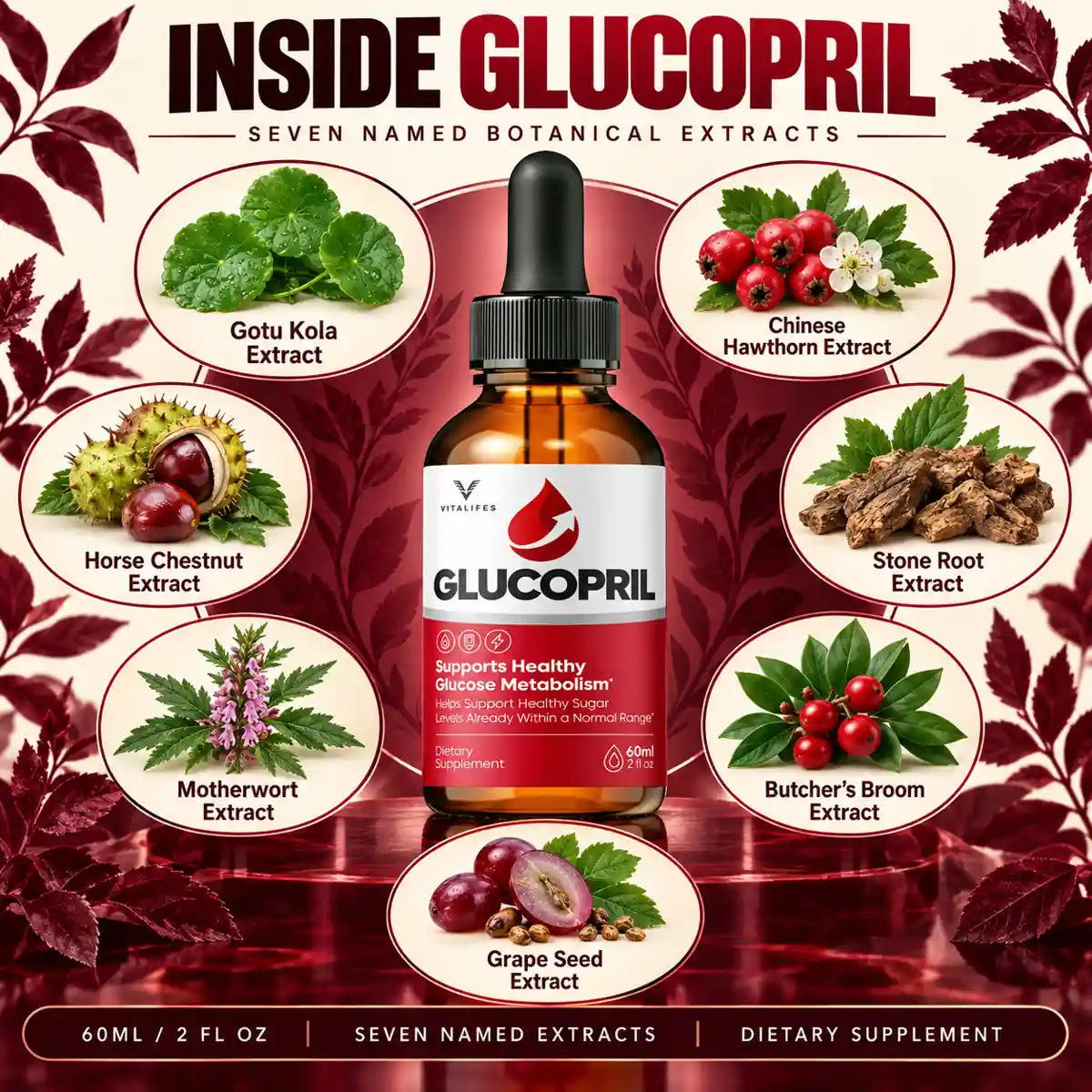
- Stone root is Collinsonia canadensis, a North American mint-family plant used in 19th-century Eclectic medicine mainly for haemorrhoids and varicose veins.
- PubMed indexes four papers naming Collinsonia canadensis, ever, across more than 135 years of the database's coverage.
- Two of the four are 19th-century clinical journal articles, written before randomised trial methodology existed.
- One is a 1999 phytochemistry paper that isolated a new flavonoid; it ran no biological or clinical testing at all.
- One is a 2014 screen of 897 plant extracts against a breast cancer cell line, in which stone root appeared as one entry with no special result and no relevance to veins or glucose.
What stone root is, and where its reputation comes from
Collinsonia canadensis is a tall perennial in the mint family, native to woodland in eastern North America, with a thick knotty rhizome that gives it both its common name and its folk reputation: stone root, said to resemble small stones, and sometimes credited — without modern evidence — with a traditional use for kidney or bladder stones. Its better-documented traditional use, from 19th-century American Eclectic medicine, was for haemorrhoids and varicose veins, the same territory as several of its labelmates on this bottle.
That Eclectic tradition is exactly what it sounds like: a 19th-century American school of botanical medicine, with its own journals, its own materia medica, and no access to the randomised controlled trial, which was not developed as a research standard until the 20th century. The two historical papers below come from that era and that tradition.
Every paper PubMed has, read one at a time
This section is short because the literature is short. A search for “Collinsonia canadensis” against the entire PubMed database, with no date or study-type filter, returns exactly four records. Here is each one.
An 1887 article in the British Medical Journal, titled simply “Collinsonia Canadensis,” by J.V. Shoemaker. It is a clinical account from the era before controlled trials, describing the plant’s traditional use rather than testing it against a comparator.
An 1888 article, also titled “Collinsonia Canadensis,” in The Southern Medical Record, an American Eclectic-tradition journal. Like the 1887 piece, it is a period clinical account, not a controlled study.
A 1999 phytochemistry paper in the Journal of Natural Products isolated a new flavonoid, 2,5-dihydroxy-6,7-dimethoxyflavanone, from the leaf and stem exudates of Collinsonia canadensis, alongside three previously known flavones. This is chemistry, not biology: the paper identifies what compounds are present in the plant and runs no test of what those compounds do in a body.
A 2014 high-throughput screening study tested 897 aqueous extracts of commonly used natural products, including stone root, for anti-mitotic activity against MDA-MB-231 human breast cancer cells — a search for the next paclitaxel, modelled on how that cancer drug was originally found in a botanical screen. Stone root was one of the 897 extracts tested. The paper's list of the most potent anti-mitotic herbs found in that screen does not include it, and the study has no connection to veins, circulation or glucose at all; it is cited here only because it is the newest entry PubMed has under this plant's name.
| Paper | Type | What it actually tested |
|---|---|---|
| Shoemaker, 1887, BMJ | Clinical account, pre-trial era | Traditional use, no comparator |
| Southern Medical Record, 1888 | Clinical account, pre-trial era | Traditional use, no comparator |
| Stevens et al., 1999, J Nat Prod | Phytochemistry | Isolated a new flavonoid; no biological testing |
| Mazzio et al., 2014, Phytother Res | High-throughput cell screen | One of 897 extracts screened for anti-mitotic activity; not a standout result |
This is the complete PubMed record for Collinsonia canadensis at the time of writing. No entry in it is a controlled human trial, an animal efficacy study, or a test of any glucose-related outcome.
Order GlucoPril knowing exactly what the stone root literature contains
Seven named botanical extracts, two drops a day after a meal, and a website that tells you when an ingredient's published record is this thin rather than filling the gap with inference.
Price at checkout · one payment, no subscription · money-back guarantee as printed at the checkout
Order GlucoPril On The Official Website2 drops a day after a meal · 60 ml a bottle · lot GLU-26/GL-2779
What an empty modern literature actually means
It is worth being precise about what four papers, none of them a controlled trial, does and does not establish. It does not mean stone root is unsafe: nothing in the record suggests harm either, because almost nothing in the record tests it at all. It does not mean the 19th-century Eclectic tradition was wrong about what it observed in patients; traditional clinical observation is a real, if limited, form of evidence, and it is simply not the same form as a placebo-controlled trial.
What it does mean is that none of the claims this article could otherwise make about dose, mechanism or effect size — the kind of numbers the gotu kola article or the grape seed article on this site can print with a PMID beside them — exist to print for this plant. Where other ingredient pages on this site say “the trial used this dose, for this outcome,” the honest sentence for stone root is that no trial like that has been run.
The alternative to printing “the literature is this thin” is inventing a dose or a mechanism that sounds plausible and citing nothing, which is worse than an honest gap. A reader comparing this label against real research deserves to know which of the seven names has that research behind it and which does not.
Six labelmates, six PubMed counts
Numbers are more useful side by side than alone, so here is a plain search-count comparison: searching PubMed for each plant’s Latin binomial as an exact phrase, with no filter for study type, on the same day this article was written.
| Plant on this label | Latin binomial | PubMed hits for the exact phrase |
|---|---|---|
| Gotu kola | Centella asiatica | 1,375 |
| Horse chestnut | Aesculus hippocastanum | 321 |
| Chinese hawthorn | Crataegus pinnatifida | 274 |
| Butcher's broom | Ruscus aculeatus | 104 |
| Motherwort | Leonurus cardiaca | 82 |
| Grape seed (extract) | Vitis vinifera, seed-related search | 46 |
| Stone root | Collinsonia canadensis | 4 |
A raw hit count is a blunt instrument — it mixes trials, case reports, chemistry papers and reviews without weighting them — and it is still a fair, checkable measure of how much attention a plant has received from any branch of published research. Every other name on this label clears at least forty papers. Stone root clears four.
That gap of roughly twenty-to-one between stone root and its next-thinnest labelmate is not a rounding error, and it is not a comment on the plant’s traditional reputation, which this article has tried to describe fairly. It is a comment on how much anyone, in over a century of indexed biomedical publishing, has gone looking.
How the record lines up with this label
| What the research contains | What this label carries | The gap |
|---|---|---|
| Two 19th-century clinical accounts, one phytochemistry paper, one unrelated cell screen | Stone Root Extract, one of seven, no amount printed | No modern dose-response data exists for any comparison to be made against |
| No controlled trial of any kind, in any species | Sold as part of a blend marketed for glucose metabolism | There is no trial dose to set beside a blend total, because none was ever run |
| Traditional use for haemorrhoids and varicose veins, per 19th-century Eclectic sources | Grouped with horse chestnut, butcher's broom and other modern venous-literature plants | The traditional indication is consistent with its labelmates; the modern evidence is not |
The first column is the entire published record. The second is read off the seller’s artwork. The third is what a buyer is left holding.
What is on the safety record
Because the modern literature is essentially silent, there is no published human trial safety data to summarise for stone root specifically. The 2014 cell-screening study used an aqueous extract at concentrations designed for laboratory testing, not oral human dosing, and its results have no bearing on safety at supplement doses.
- No modern clinical safety data exists for Collinsonia canadensis at supplement-level intakes.
- No drug-interaction study of stone root was found in this search.
- Traditional use describes it as generally well tolerated, but that description predates modern adverse-event reporting standards.
- The label direction for this product covers all seven plants at once: for healthy adults, not for pregnancy or nursing.
“Dietary supplement. For adults. Follow the directions printed on the bottle and keep it out of reach of children.” That is the full extent of the printed caution, and it is the same sentence this category prints everywhere.
What to make of it on this bottle
Of the seven names on this label, stone root has by a wide margin the thinnest published record. Horse chestnut and butcher’s broom, its two labelmates from the same traditional venous category, each carry a real placebo-controlled trial and a pooled systematic review. Gotu kola carries four dose-ranging trials. Stone root carries two 19th-century case narratives, a chemistry paper, and a cameo in an unrelated cancer screen.
That is not a claim that stone root does nothing — absence of research is not evidence of absence of effect, and a great many traditional botanicals simply have not been studied with modern methods yet. It is a claim about what a reader can actually verify today: for six of the seven names on this bottle, some real research literature exists to check a claim against. For this one, there is almost none to check.
References
- Shoemaker JV. Collinsonia Canadensis. Br Med J. 1887;2(1396):712-3. PMID 20752052. https://pubmed.ncbi.nlm.nih.gov/20752052/
- Collinsonia Canadensis. South Med Rec. 1888. PMID 36022907. https://pubmed.ncbi.nlm.nih.gov/36022907/
- Stevens JF, Ivancic M, Deinzer ML, Wollenweber E. A novel 2-hydroxyflavanone from Collinsonia canadensis. J Nat Prod. 1999;62(2):392-4. PMID 10075799. https://pubmed.ncbi.nlm.nih.gov/10075799/
- Mazzio E, Badisa R, Mack N, Deiab S, Soliman KF. High throughput screening of natural products for anti-mitotic effects in MDA-MB-231 human breast carcinoma cells. Phytother Res. 2014;28(6):856-67. PMID 24105850. https://pubmed.ncbi.nlm.nih.gov/24105850/